




Comment choisir la colle époxy adaptée au collage de grandes dalles de pierre ?
Release time: 2026-11-03
Table des matières
Large stone slabs are widely used in kitchen countertops, bathroom surfaces, wall panels, commercial interiors, and architectural projects. Whether working with quartz, natural stone, porcelain, or engineered surfaces, achieving a reliable bond is essential for both appearance and long-term performance. Choosing the right adhesive, however, involves more than simply looking for a strong glue. Material compatibility, color matching, mixing accuracy, and application conditions all influence the final result.
An epoxy stone adhesive is a practical option for many stone fabrication and bonding applications, particularly when consistent mixing and reliable adhesion are important. For fabricators and installers, understanding what to look for before purchasing an adhesive can help avoid unnecessary rework and improve production efficiency. This guide explores the main selection factors, application considerations, and how STURDMAX ULTIMA BOND can support different stone bonding requirements.
What Makes Large Stone Slab Bonding Challenging?
Bonding large stone slabs comes with several practical challenges. Unlike small stone repairs, slab fabrication often involves large surfaces, heavy materials, and joints that remain visible after installation. The adhesive must be suitable for the specific substrate and application method. Quartz, granite, marble, solid surface materials, ceramics, and porcelain may have different surface characteristics, so one adhesive should not automatically be assumed suitable for every material.
Appearance is another important consideration. On light-colored or decorative slabs, adhesive that contrasts sharply with the stone can make joints more noticeable. Fabricators therefore need to consider both bonding performance and color compatibility when selecting a product. Working conditions also matter. Dust, moisture, surface contamination, and unsuitable temperatures can affect the application process. Before choosing a slab bonding adhesive, it is worth reviewing the material specifications, joint requirements, and installation environment rather than relying on a single general-purpose product.
Key Factors When Choosing an Epoxy Stone Adhesive
The first factor to consider is material compatibility. Check whether the adhesive is specifically recommended for the stone or surface material being processed. A product designed for quartz may also be suitable for certain ceramics or porcelain, but this should always be confirmed through its technical documentation. Choosing an adhesive based on verified compatibility helps reduce the risk of poor bonding and unnecessary material waste.
Color selection is equally important for decorative stonework. Precolored adhesives are available in different shades, making it easier for fabricators to find an option that complements the slab. The mixing system should also match the workshop’s production requirements. A cartridge-based product with a defined mixing ratio can simplify dispensing compared with manually measuring separate components. Finally, consider packaging size, shelf life, and storage requirements. These details may seem minor, but they influence purchasing decisions, inventory management, and day-to-day fabrication efficiency.
Why Choose Precolored Cartridge Epoxy Adhesive for Stone Slabs?
Precolored epoxy adhesives offer a useful advantage in stone fabrication: they combine bonding functionality with color options that can better match different slab finishes. This is particularly relevant for countertops, decorative panels, and other installations where visible joints may affect the overall appearance. Rather than treating adhesive color as an afterthought, fabricators can select a suitable shade as part of the material preparation process.
Cartridge packaging provides another practical benefit. A two-component 10:1 cartridge system is designed to dispense the components in a specified proportion when used with compatible dispensing equipment and mixing accessories. This can make the application process more convenient and reduce the need for manual measuring. It is important to use the correct equipment and follow the manufacturer’s instructions to achieve the intended mixing ratio. For workshops handling different project sizes, cartridge packaging can also offer flexibility, especially when both smaller repair jobs and regular fabrication work are part of the daily schedule.
Epoxy Adhesive for Quartz, Natural Stone, Ceramics, and Porcelain
Different stone and surface materials call for different bonding considerations. Quartz surfaces are commonly used for countertops and interior installations, where joint appearance and material compatibility are important. Natural stones such as marble and granite may have variations in porosity, texture, and color, so surface preparation and adhesive selection should be based on the actual material.
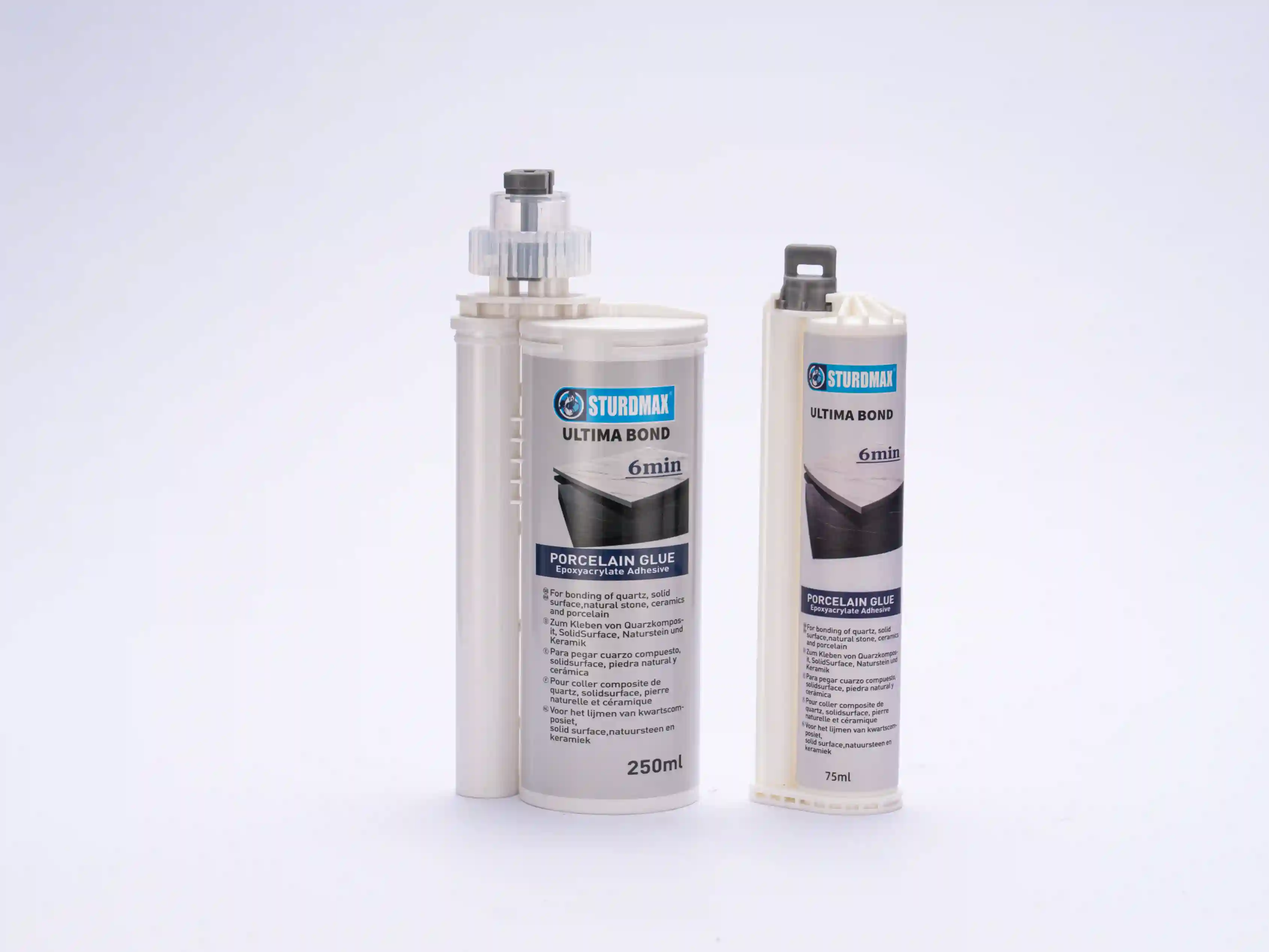
Ceramic and porcelain surfaces also require careful product selection. Their surface characteristics can differ from those of natural stone, making it important to confirm that the adhesive is suitable for the intended substrate. STURDMAX ULTIMA BOND is a precolored cartridge adhesive developed for quartz, solid surface materials, natural stone, ceramics, and porcelain. This broad material compatibility makes it relevant to fabricators working with several types of surfaces. However, users should always check the product specifications and conduct a small compatibility test when working with unfamiliar materials or demanding applications.
How to Apply Epoxy Stone Adhesive for Better Bonding Results
Good bonding starts before the adhesive is dispensed. The surfaces to be coated must be dry and clean, with dust, oil, and other contaminants removed. According to the ULTIMA BOND application requirements, the surface must also be free of absorbent wax. Any residue or unsuitable surface condition can interfere with proper contact between the adhesive and the substrate, so preparation should never be rushed.
Once the surface is ready, prepare the cartridge using compatible dispensing equipment and follow the specified 10:1 mixing ratio. Apply the adhesive evenly to the intended bonding area, taking care to avoid unnecessary gaps or excessive material. The components should be mixed and dispensed according to the product instructions, including any requirements for mixing nozzles or initial dispensing. After application, position the stone components as required and allow the adhesive to cure under the recommended conditions. Avoid moving or disturbing the bonded pieces before the specified curing period has passed. Following these steps helps create a more controlled and consistent fabrication process.
Why Consider STURDMAX ULTIMA BOND Epoxy Stone Glue?
For stone fabricators looking for a convenient cartridge-based bonding solution, STURDMAX ULTIMA BOND offers several practical features. It uses a 10:1 two-component cartridge design and is available in 250ml and 75ml packages. The two sizes give buyers flexibility when planning material use, whether they are handling regular workshop production or smaller individual jobs.
The product also offers different color options to help match a range of stone surfaces. Its stated application areas include indoor and outdoor use, while its listed compatible materials include quartz, solid surface, natural stone, ceramics, and porcelain. The shelf life is more than 12 months under the manufacturer’s stated conditions, which can help businesses plan purchasing and stock rotation.
For bulk buyers, the carton configurations are also worth considering:
| Specification | 250ml | 75ml |
|---|---|---|
| Emballer | 250ml cartridge | 75ml cartridge |
| Carton quantity | 32 pcs/CTN | 100 pcs/CTN |
| Format du carton | 375 × 340 × 200mm | 500 × 415 × 196mm |
| Shelf life | More than 12 months | More than 12 months |
STURDMAX focuses on stone adhesive solutions for professional fabrication and installation needs. If your business processes different types of stone or porcelain surfaces, ULTIMA BOND is worth considering as part of your adhesive selection. Review the technical information and confirm compatibility with your specific materials before placing an order.
FAQ
What Is the Mixing Ratio of ULTIMA BOND Epoxy Stone Glue?
ULTIMA BOND uses a 10:1 two-component cartridge system. It should be applied with compatible dispensing equipment, following the manufacturer’s instructions to ensure the correct proportion and mixing process.
Can Epoxy Adhesive Be Used on Quartz and Porcelain Slabs?
ULTIMA BOND is listed for use with quartz, solid surface materials, natural stone, ceramics, and porcelain. Always check the product specifications and confirm suitability for the exact substrate and application.
Is Precolored Epoxy Adhesive Available in Different Colors?
Yes. ULTIMA BOND offers different color options, allowing fabricators to select a shade that better complements the stone surface and the intended installation.
How Should Stone Surfaces Be Prepared Before Application?
The surface must be dry and clean, with dust, oil, and contaminants removed. It must also be free of absorbent wax before the adhesive is applied. Always follow the product’s preparation and application instructions.
What Is the Shelf Life of ULTIMA BOND?
The stated shelf life is more than 12 months. For the best storage results, follow the manufacturer’s recommended storage conditions and check the product packaging before use.