




Как выбрать подходящий клей для мрамора при ремонте и укладке натурального камня?
Release time: 2026-09-15
Оглавление
Natural stone can look strong and permanent, but marble is still vulnerable to cracks, broken edges, surface defects, and damage during cutting or transportation. Choosing the right adhesive can make a major difference in whether a repair remains invisible and whether a bonded stone component stays stable over time. For fabricators, installers, and stone processors, the decision is not simply about finding the strongest product. The adhesive also needs to match the stone type, application method, curing requirements, appearance, and finishing process.
Подходящий Marble Glue should provide reliable bonding while supporting the final appearance of the stone. For white and translucent materials, transparency and resistance to yellowing may be especially important. For larger bonding applications, strength, shrinkage, and weather resistance can become more important. Understanding these differences makes it easier to select an adhesive that works effectively from initial application through grinding and polishing.
What Should You Look for in a Marble Adhesive?
Bonding strength is naturally one of the first factors to consider. However, the adhesive should also remain workable long enough for the intended application and cure within a reasonable production schedule. A product that cures too quickly can make large-area fabrication difficult, while one that cures too slowly may delay cutting, grinding, or polishing.
Color and appearance are equally important when repairing visible marble surfaces. An adhesive that changes color after curing can create noticeable repair marks, particularly on white, cream, or translucent stone. Low shrinkage is another useful characteristic because excessive shrinkage can affect the repaired area or create an uneven surface. Finally, good polishing performance allows the bonded or repaired section to be finished together with the surrounding stone.
How Do Different Types of Marble Glue Compare?
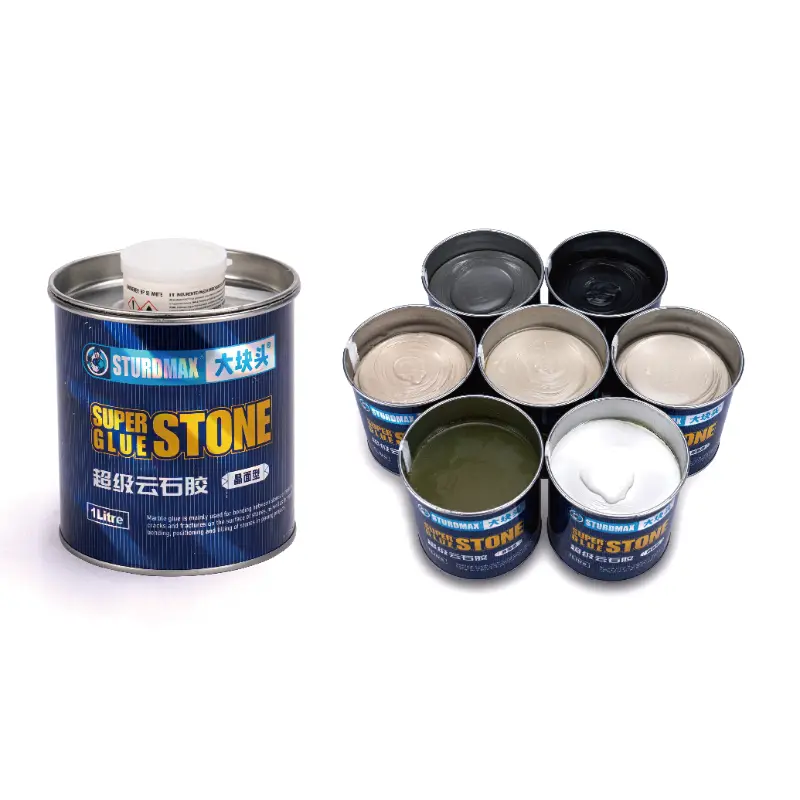
Different adhesive technologies are designed for different stoneworking requirements. Polyester-based products are commonly used for general marble repair, bonding, and fabrication because they offer practical curing times and are available in different grades for different working requirements. Sturdmax offers several polyester marble glue grades, including Super Grade, S Grade, A Grade, and B Grade, giving fabricators flexibility when matching adhesive performance to a particular application.
Полиэстеровый мраморный клей can be a practical choice for routine marble processing, edge bonding, filling, and repair work where efficient handling and finishing are important. For many standard stoneworking applications, the balance between working time, curing, adhesion, and polishing makes polyester adhesive a convenient option.
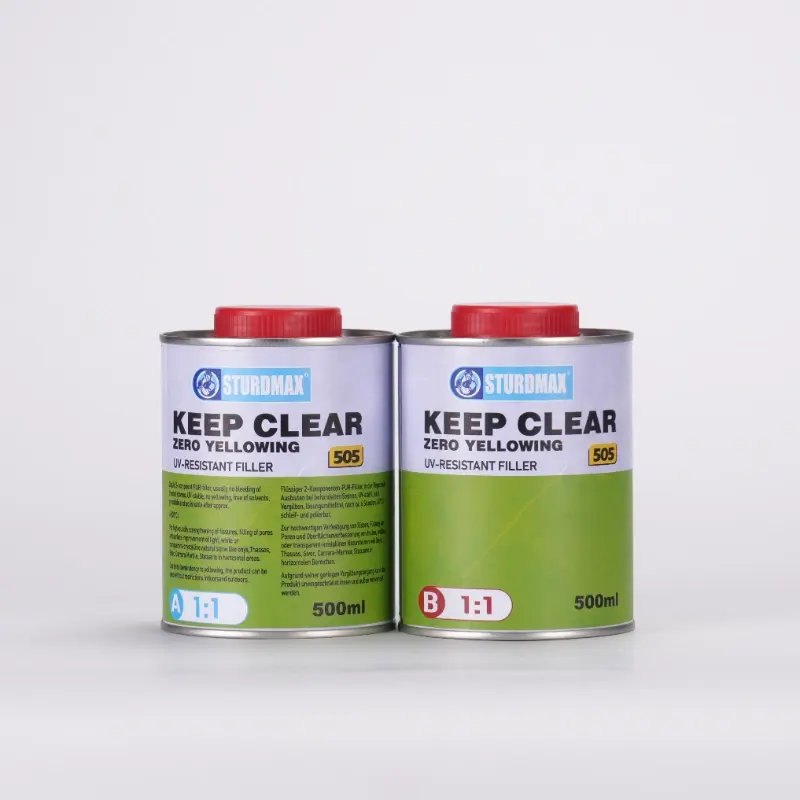
Crystal adhesives are more suitable when the visual appearance of the repaired area is a major concern. Sturdmax’s Fast Drying Crystal Glue Multi-polyester Marble Glue is designed for light-colored and translucent stones such as white marble, jade, and other crystalline materials. Its transparent appearance, resistance to yellowing, and polishing characteristics help reduce the visual impact of repairs.
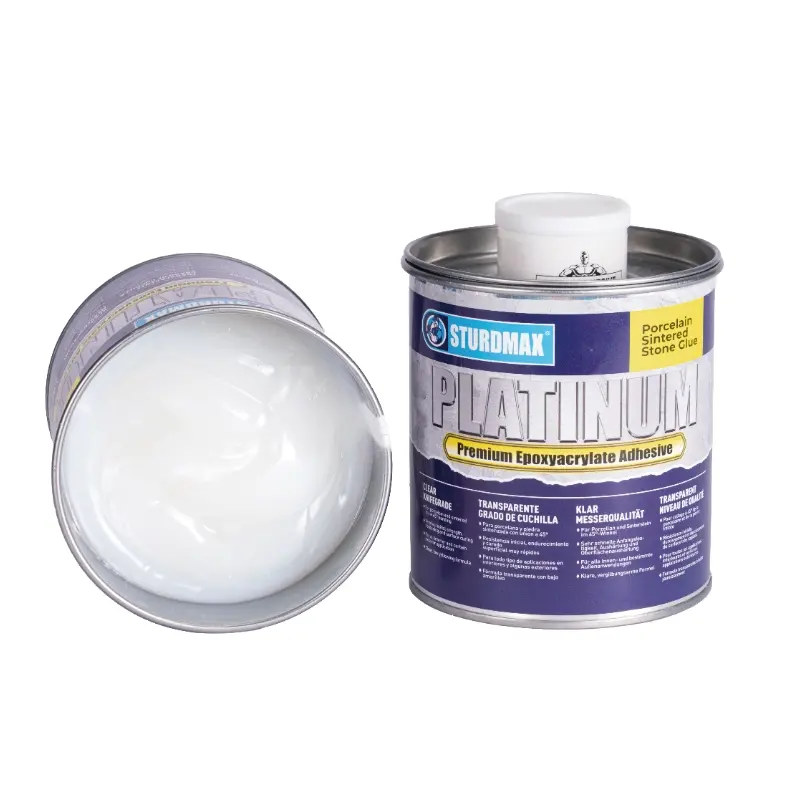
Epoxy-based adhesives provide another option when stronger bonding, low shrinkage, and greater resistance are required. Sturdmax Epoxy Crystal Glue uses a 2:1 resin-to-hardener ratio and is designed for materials including marble, granite, porcelain, artificial stone, and terrazzo. Its gel-like consistency can also help maintain the adhesive on vertical surfaces and support thin adhesive joints.
Does Marble Repair Require a Different Adhesive from Installation?
Repair and installation may involve the same stone, but the adhesive requirements are not always identical. A small repair might involve filling a crack, rebuilding a broken corner, repairing an edge, or bonding a separated piece. In these cases, appearance, color compatibility, curing speed, and polishing performance can be just as important as raw bonding strength.
Installation and fabrication can place greater demands on the adhesive. Edge bonding, slab fabrication, countertop production, decorative stone assembly, and bonding between stone and another substrate may require stronger and more durable adhesion. The working time also needs to match the size and complexity of the job. For larger assemblies, an adhesive that provides sufficient open time and low shrinkage can make production easier.
This is why selecting a Клей для мрамора based only on the word “strong” is not enough. The correct product should be selected according to the actual task, the size of the bonded area, the stone surface, and the finishing process that follows.
How Should the Stone Type Affect Your Choice?
The appearance and physical characteristics of the stone should always be considered before choosing an adhesive. White marble presents a particularly demanding situation because even a small amount of discoloration can be visible after polishing. Transparent or low-yellowing adhesives are therefore often preferable for light-colored stone.
Dark marble provides more flexibility in terms of visual matching, but the joint color and final finish still need attention. For granite and engineered stone, bonding strength, surface compatibility, and resistance to the conditions of the application may become more important.
Translucent materials such as jade, white crystalline stone, and certain types of onyx require even greater attention to adhesive transparency. A highly visible adhesive line can affect the appearance of the finished slab, so crystal-type products can be a better fit for these applications. Sturdmax’s crystal glue range is positioned for this type of light and translucent stonework, with products designed to support filling, bonding, and polishing.
What About the Actual Working Conditions?
The environment in which the adhesive will be used can be just as important as the stone itself. Indoor decorative repairs may have very different requirements from stone components exposed to changing temperatures, moisture, or outdoor conditions. Vertical bonding also requires an adhesive with suitable consistency so that it does not flow away from the intended joint.
Temperature affects curing speed as well. Before production begins, fabricators should check the recommended mixing ratio, working time, curing conditions, and surface preparation requirements of the selected product. Compatibility should also be confirmed when bonding stone to another material rather than stone-to-stone.
A small test is often worthwhile, especially when working with a new stone type or an unfamiliar substrate. Testing can reveal potential problems with color, adhesion, curing, polishing, or surface reaction before the adhesive is used across a larger project.
Choosing the Right Marble Glue for the Job
The easiest way to narrow down the options is to start with four questions: What stone are you working with? Is the adhesive being used for repair, fabrication, or installation? How important is the final appearance? And what curing and environmental conditions will the adhesive experience?
For general marble repair and fabrication, polyester-based products can provide a practical solution. For white, light-colored, or translucent stone where appearance is critical, crystal adhesive may be more appropriate. When low shrinkage, strong bonding, and broader material compatibility are priorities, an epoxy-based adhesive can offer a different performance profile.
Sturdmax’s marble adhesive range reflects these different requirements, from polyester marble glue for routine stoneworking to fast-drying crystal glue and epoxy crystal adhesive for more specialized applications. Rather than choosing one adhesive for every project, matching the product to the stone and working conditions can produce more consistent results and reduce problems during later finishing.
Часто задаваемые вопросы
What is Marble Glue used for?
It is commonly used for marble repair, filling, edge bonding, fabrication, and other stone bonding applications.
Can polyester adhesive be used for marble repair?
Yes. Polyester marble adhesives are widely suited to routine filling, repair, and bonding applications when the product matches the stone and working conditions.
What adhesive is suitable for white marble?
A transparent or low-yellowing crystal adhesive is often a better choice when maintaining the appearance of white or translucent marble is important.
How long does marble adhesive take to cure?
Curing time depends on the adhesive type, temperature, mixing ratio, and application. Always follow the specific product’s technical instructions.