





Как подобрать цвет клея для камня, соответствующий натуральному мрамору и граниту?
Release time: 2026-11-10
Оглавление
Natural marble and granite bring unique colors and patterns to countertops, wall panels, floors, and decorative stonework. However, working with natural stone often involves more than cutting and fitting slabs. Filling joints, repairing chipped edges, and bonding separate pieces also require careful attention to color. Even when the adhesive performs well, a noticeable color difference can affect the finished appearance.
This is why color matching matters in stone fabrication and restoration. Choosing an adhesive with a suitable base color is not always enough, especially when working with stones that have distinctive veins or mixed shades. Using a compatible pigment paste gives fabricators more flexibility to adjust the adhesive color before application.
In this guide, we will look at the factors that influence stone color matching, how to mix pigments with stone adhesives, and what to consider when choosing coloring products for marble and granite projects.
Why Does Stone Adhesive Color Matter in Marble and Granite Projects?
Stone joints and repaired areas are often visible, particularly on countertops, vanity tops, window sills, and large-format wall panels. If the adhesive color contrasts sharply with the surrounding stone, the joint may stand out even when the bonding work is properly completed. This can be especially noticeable with white marble, light-colored granite, and slabs featuring distinctive natural veins.
A well-matched stone adhesive color helps create a more visually consistent surface. For example, a beige adhesive may blend better with cream-colored marble than a pure white or dark-colored product. Similarly, gray or darker tones may be more suitable for certain granite patterns.
Color matching is also important during stone restoration. When a damaged corner or small crack needs repair, the goal is not simply to fill the damaged area. The repaired section should look as natural as possible alongside the original material. Selecting the right pigment can help achieve that result.
What Makes Natural Stone Color Matching Difficult?
Natural stone does not come in perfectly uniform colors. Marble may have a white, beige, gray, or brown base, with veins that vary in thickness and intensity. Granite often contains several mineral colors, creating a speckled or granular appearance. These natural variations make it difficult to find one adhesive color that works for every project.
Even two slabs from the same stone category may look different under natural or artificial lighting. Their surface patterns, background shades, and mineral distribution can all influence how a filled joint appears. A color that looks suitable on a small sample may seem different when applied to a larger area.
For this reason, fabricators should assess the actual slab before preparing the adhesive. Looking at the dominant background color is a useful starting point, but visible veins and surrounding patterns should also be considered. Testing the mixture on a small sample is a practical way to check whether the selected color blends with the stone.
How to Choose the Right Pigment for Stone Adhesive
The first step is to identify the main color of the stone around the joint or damaged area. For light marble, white and beige pigments may provide a suitable starting point. Gray granite may require a different tone, while stones with warm or mixed colors may need a more carefully adjusted combination.
Pigment concentration is another important factor. A highly concentrated coloring paste can produce a noticeable color change with a relatively small amount of material. This makes it easier to adjust the shade gradually rather than adding too much pigment at once.
When selecting an epoxy pigment paste, compatibility should be checked before use. Not every coloring product is suitable for every adhesive chemistry. The pigment should be designed for the intended resin system and used according to the manufacturer’s instructions.
It is also worth considering the working environment. Indoor and outdoor stone applications may involve different exposure conditions, so users should check the product’s stated application range and color stability after curing.
How to Mix Pigment Paste with Epoxy Stone Adhesive
Correct mixing is essential for achieving a consistent color. Before adding pigment, make sure the stone adhesive and coloring paste are suitable for use together. Follow the adhesive manufacturer’s instructions for preparing the components, and do not change the specified resin-to-hardener ratio to adjust the color.
Add the pigment gradually and mix thoroughly until the color is evenly distributed. Adding too much pigment at once can make it harder to control the final shade. For STURDMAX Pigment Coloring Paste, the recommended maximum working ratio is 5%. The actual amount should be adjusted according to the desired color and the product instructions.
A small test sample is particularly useful when working with natural stone. Allow the sample to cure as directed, then compare its appearance with the surrounding slab. Remember that the final color should be assessed after curing rather than relying only on the wet mixture.
For a consistent result, prepare only the amount needed for the current application and keep the mixing process as uniform as possible.
Which Stone Adhesives Are Suitable for Color Matching?
Different stone fabrication tasks call for different adhesive products. Some projects focus on bonding marble pieces, while others involve filling seams, repairing edges, or assembling decorative stone components. The adhesive should be selected according to the material and application requirements before color adjustment begins.
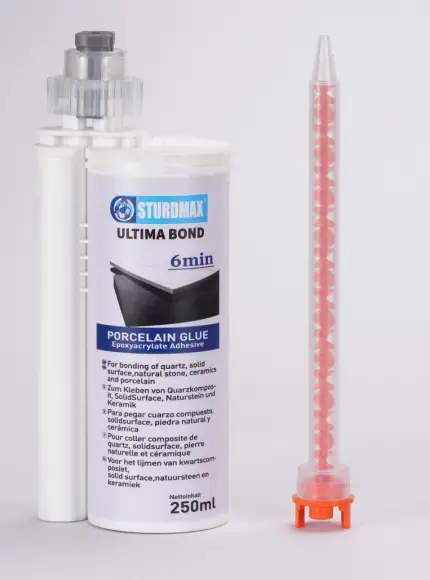
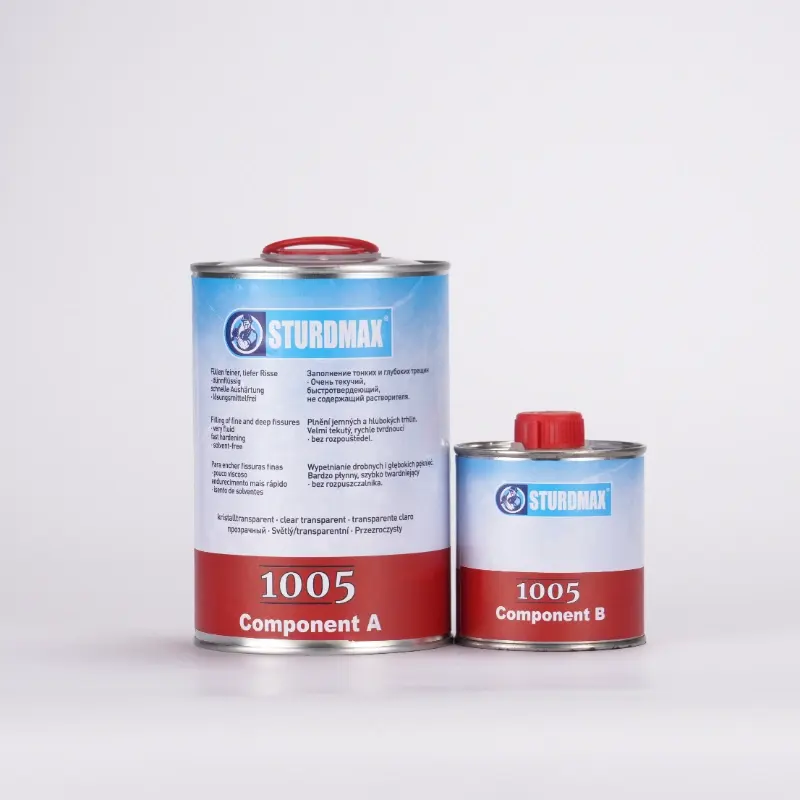
STURDMAX offers several products in its stone adhesive range, including Epoxy 2:1 5010 Crystal Marble Glue and Epoxy 2:1 Crystal Marble Glue 1.5kg. These products can be considered for relevant marble bonding and fabrication applications. Fast Drying Crystal Glue is another option for projects where a quicker working process is required.
When planning a color-matching job, users should first confirm that the selected coloring paste is compatible with the adhesive. STURDMAX’s coloring paste is formulated for epoxy stone adhesive, marble glue, and epoxy mastic. Compatibility with a specific product should still be confirmed through its technical instructions or supplier before mixing.
This approach helps fabricators choose an appropriate adhesive first and then adjust its appearance to suit the stone.
Why Choose STURDMAX Pigment Coloring Paste for Stone Adhesives?
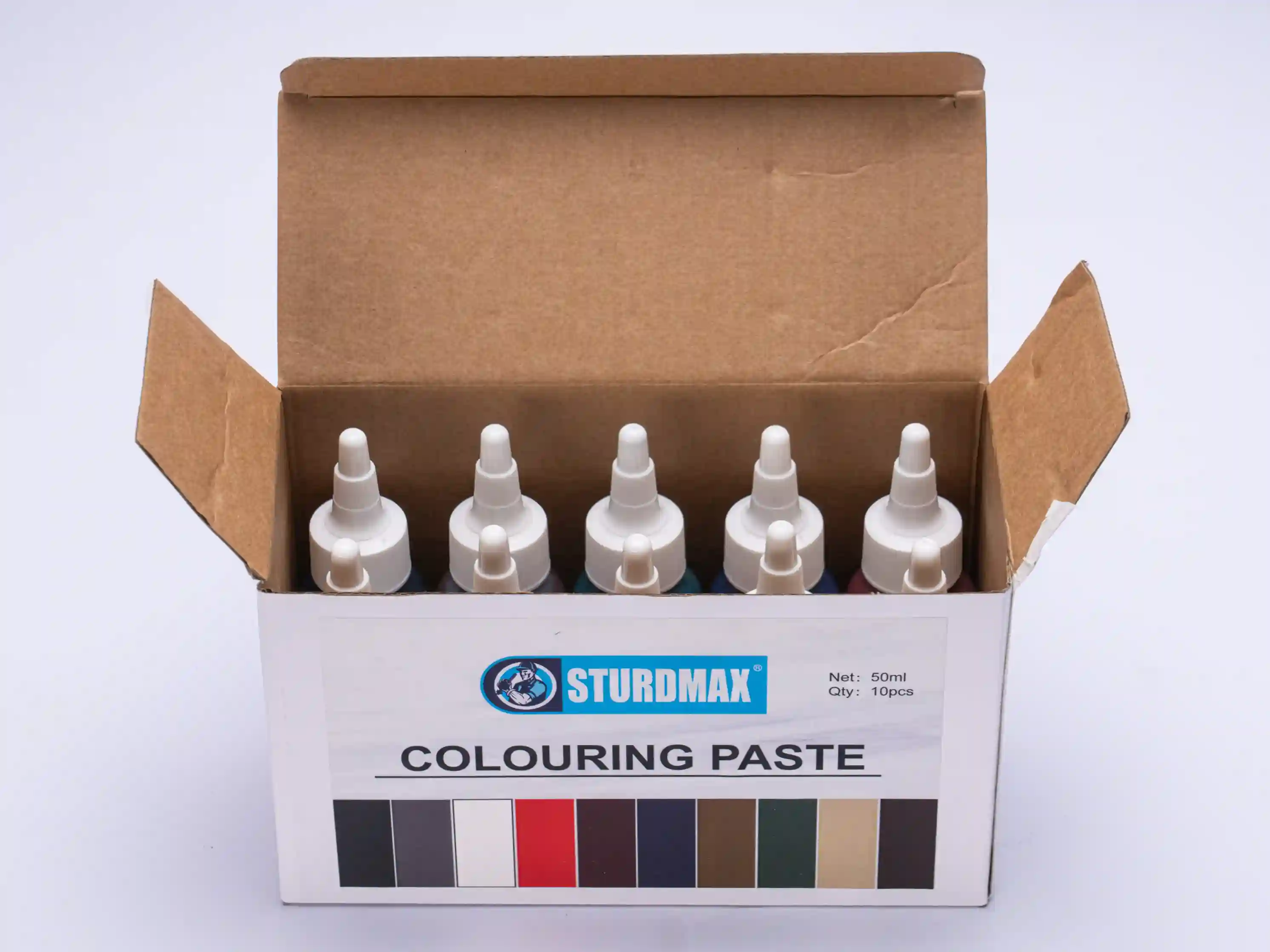
For stone fabricators and restoration professionals, having several color options available can make on-site adjustments more convenient. STURDMAX Pigment Coloring Paste for stone adhesives is designed for use with compatible epoxy stone adhesives, marble glue, and epoxy mastic.
The product features high tinting strength, so only a small amount is needed to create a noticeable color change. It is designed to avoid affecting epoxy curing and final bond strength when used as directed. Its color stability after the epoxy has fully cured is another useful feature for stone joint filling and restoration work.
The coloring paste comes in a 10-color set, with 50ml packaging. The ready-matched colors provide a practical starting point for adjusting shades to match marble and granite surfaces. It is suitable for indoor and outdoor applications, with a stated shelf life of more than 12 months.
For businesses that regularly handle different stone colors, keeping a selection of compatible pigments available can help simplify color preparation and reduce the need to rely on a single adhesive shade.
Practical Tips for Better Stone Adhesive Color Matching
A few simple practices can make color matching more predictable. First, always use a sample of the actual stone whenever possible. Online product photos and general color descriptions cannot fully represent the natural variations found in marble and granite.
Second, add pigment in small amounts and record the ratio used for each successful mixture. This can help maintain consistency when repeating similar work. However, the same ratio may not produce an identical visual result with a different adhesive or stone type.
Finally, follow the adhesive’s mixing and curing instructions. Keep the stone surface clean and dry as required, and avoid changing the specified hardener ratio. If a project involves an unfamiliar adhesive combination, confirm compatibility with the supplier before proceeding.
Good color matching comes from combining the right materials with careful testing. With a suitable adhesive and a compatible pigment paste, fabricators can achieve a more coordinated appearance across stone joints, repairs, and bonded components.
Часто задаваемые вопросы
What pigment is best for coloring epoxy stone adhesive?
Choose a pigment paste specifically formulated for the adhesive’s resin system. For epoxy stone applications, a compatible epoxy coloring paste with high tinting strength can help adjust the shade without requiring a large amount of pigment.
How much pigment paste should be added to stone adhesive?
The recommended maximum working ratio for STURDMAX Pigment Coloring Paste is 5%. Start with a small amount, mix thoroughly, and test the color before applying it to the finished stone. Always follow the relevant product instructions.
Can pigment paste be used for marble and granite repair?
Yes, a compatible pigment paste can help adjust adhesive color for marble and granite joint filling, edge repair, and restoration. The selected shade should be tested against the actual stone before use.
Will pigment paste affect epoxy curing or bond strength?
STURDMAX Pigment Coloring Paste is designed not to affect epoxy curing or final bond strength when used as directed. Staying within the recommended dosage and following the adhesive manufacturer’s mixing instructions are important.
Is STURDMAX Pigment Coloring Paste suitable for outdoor applications?
The product information lists both indoor and outdoor applications. For a specific project, check the adhesive’s own application requirements and confirm that the complete adhesive system is suitable for the intended environment.