



На что обращать внимание при выборе акрилового клея для столешниц из фарфоровых плит?
Release time: 2026-10-09
Оглавление
Porcelain slab countertops are popular in kitchens, bathrooms, and contemporary interiors because of their clean appearance and versatile design options. However, achieving a neat, reliable bond requires more than choosing a glue that works on ordinary stone. Porcelain surfaces are typically dense and have low porosity, so adhesive compatibility, surface preparation, and application technique all matter. This becomes especially important when joining countertop edges, creating mitered corners, or repairing small chips.
When choosing an Acrylic Adhesive for Porcelain Slab Countertops, fabricators should focus on three practical factors: whether the adhesive is suitable for the material, whether its color matches the slab, and whether its working and curing times fit the fabrication schedule. These details can affect both the appearance of the finished countertop and the efficiency of the installation process. Understanding them before starting helps reduce avoidable rework and makes it easier to select a product that meets the requirements of the job.
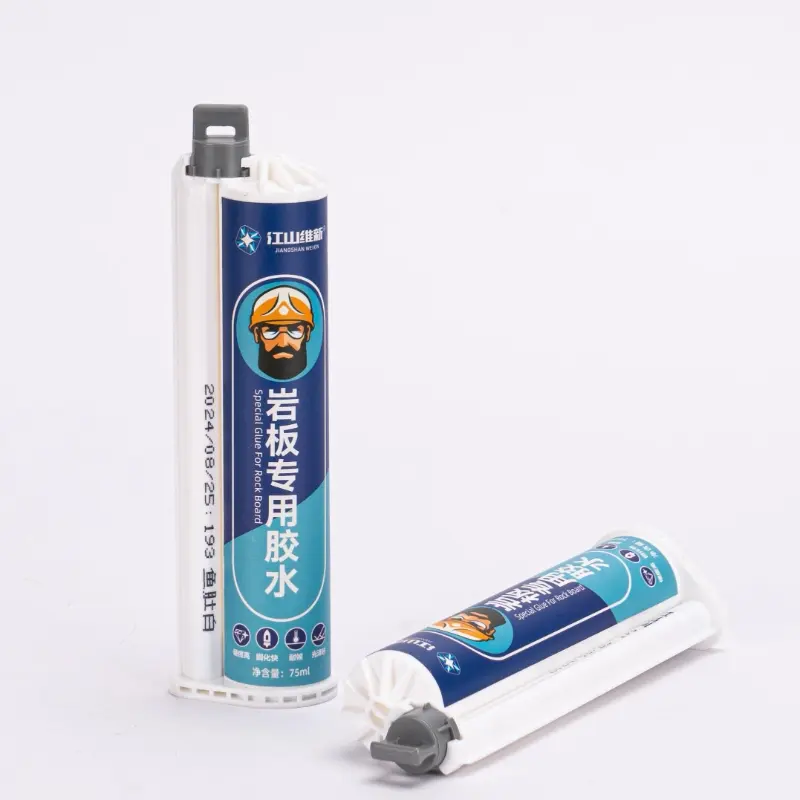
Check Material Compatibility Before Choosing Porcelain Slab Adhesive
Not every stone adhesive is suitable for every porcelain slab. Porcelain and sintered stone often have dense surfaces, which can make adhesive selection and surface preparation particularly important. A product designed for porous natural stone may not necessarily deliver the same results on a manufactured slab. When choosing a Porcelain Slab Adhesive, check whether the manufacturer explicitly lists porcelain, sintered stone, or the relevant engineered surface among its compatible materials.
The bonding location matters just as much as the material itself. Joining two countertop edges, bonding a mitered corner, filling a small chip, and attaching a separate component can involve different requirements. An adhesive that works well for a particular edge-bonding application may not be intended for every structural or installation purpose. Always match the product to the actual task rather than relying on the general label “stone adhesive.”
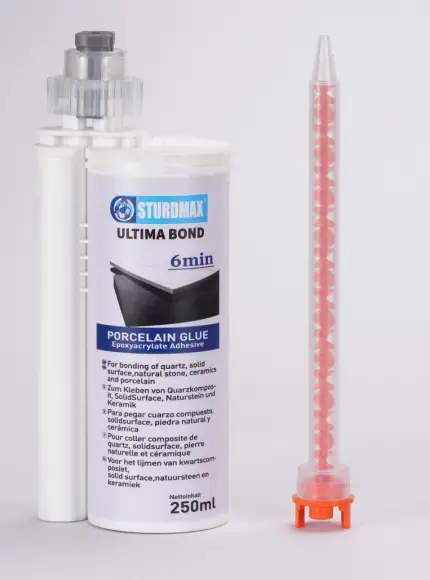
Surface preparation is another important step. The product information for Sturdmax Acrylic Rock Slab Stone Adhesive 75ml specifies that the surface should be dry and free of absorbent wax before application. Follow the full manufacturer instructions for cleaning, preparation, and application, and test compatibility on a sample when working with an unfamiliar slab.
Choose an Adhesive Color That Matches the Porcelain Slab
Color matching is a major consideration when bonding porcelain countertop edges. Unlike a hidden joint, a visible seam along a countertop edge can affect the appearance of the entire installation. A poor color match may stand out against a plain white slab or clash with the veins and patterns of a marble-look surface. Choosing the right adhesive color before fabrication can help create a more consistent finish.
Pre-colored products can simplify this process. Sturdmax Acrylic Rock Slab Stone Adhesive 75ml is available in 12 color options, with additional colors available for customization. This gives fabricators a starting point when matching different slab designs. However, the number of available colors does not guarantee an exact match for every porcelain pattern. The best choice depends on the slab’s base color, veining, finish, and the location of the joint.
Before applying adhesive to the final piece, test the selected color on a sample or inconspicuous area, following the product instructions. Examine the result under lighting similar to the countertop’s final environment. This is particularly useful for white, cream, gray, and patterned slabs, where even a small color difference can be noticeable. Remember that appearance is only one part of the decision: the adhesive must also be suitable for the material and application.
Understand Working Time and Curing Time
Working time and curing time directly affect countertop fabrication. When joining porcelain slab edges, fabricators often need to position the pieces accurately and maintain alignment before the adhesive begins to set. A product with a short working window requires careful preparation because there may be little time to correct the position once application starts. Before mixing or dispensing the adhesive, make sure the slab edges are prepared, the pieces are supported, and the necessary tools are within reach.
According to the supplied product information, Sturdmax Acrylic Rock Slab Stone Adhesive 75ml has a working time of approximately 3–5 minutes at 25°C, an initial set time of around 15–20 minutes, and a full cure time of approximately 3–5 hours. These figures are useful for planning, but they should not be treated as universal guarantees. Actual performance may vary with temperature, application conditions, and the specific requirements described in the technical data sheet.
It is also important to distinguish initial setting from full curing. An adhesive that has started to set is not necessarily ready for loading, handling, polishing, or other finishing operations. Follow the manufacturer’s instructions before moving or processing the bonded components. Planning around the full curing requirements helps avoid disturbing a joint before it has developed the intended properties.
Consider the Application: Mitered Edges, Repairs, and Countertop Joints
Porcelain countertops may require adhesive for several different tasks, and each should be assessed separately. Mitered edges, often cut at approximately 45 degrees, are used to create the appearance of a thicker countertop profile. Because the joint is visible, the adhesive needs to be compatible with the slab and suitable for the intended edge-bonding process. Color selection and accurate positioning are especially important for achieving a clean-looking seam.
Small repairs and filling tasks have different priorities. A chipped corner or minor surface defect may require a product with a suitable consistency and color, while bonding two countertop sections requires attention to joint geometry, surface contact, and support during curing. Do not assume that an adhesive intended for filling a defect is automatically appropriate for every bonding application.
Sturdmax Acrylic Rock Slab Stone Adhesive 75ml is described as suitable for gluing, repairing, and filling natural and engineered stone, with particular emphasis on 45-degree porcelain and sintered stone countertop bonding. Even so, the specific application should be checked against the product’s technical documentation. For larger or more demanding installations, follow the countertop fabricator’s installation procedures and use the complete bonding or support system required for the job.
Is Acrylic Stone Adhesive Suitable for Kitchens and Bathrooms?
Kitchen and bathroom countertops are exposed to daily use, cleaning, and occasional moisture. When choosing an acrylic stone adhesive for these environments, check the product’s approved applications and documented resistance properties. A product may be suitable for indoor use without automatically being appropriate for every location that encounters water, heat, cleaning agents, or repeated mechanical stress.
The supplied information lists Sturdmax Acrylic Rock Slab Stone Adhesive 75ml for indoor and outdoor applications. This is a useful starting point, but buyers should still confirm any specific requirements for a kitchen or bathroom countertop. For example, the conditions around a sink, backsplash, or frequently cleaned joint may differ from those around a decorative dry-area panel. Do not assume that suitability for indoor and outdoor use establishes a particular level of waterproofing, heat resistance, or chemical resistance unless the manufacturer provides supporting data.
For commercial projects, request the product’s technical data sheet and confirm the intended use with the supplier. If the installation involves unusual conditions or a high-visibility joint, test the adhesive with the actual slab material before committing to a full production run. This helps identify compatibility or appearance issues early.
How to Select the Right Sintered Stone Glue
Choosing the right Sintered Stone Glue starts with a clear understanding of the project. First, identify the slab material and the exact task, such as mitered-edge bonding, seam joining, or minor repair. Then confirm that the product is suitable for that material and application. This simple check can prevent the common mistake of selecting an adhesive based only on its name or general description.
Next, compare practical product details. Review the available colors, working time, initial set time, full curing requirements, packaging, and storage life. For Sturdmax Acrylic Rock Slab Stone Adhesive 75ml, the supplied specifications list a 75ml cartridge, 12 standard color options, customizable colors, and a shelf life of more than 12 months. Buyers placing wholesale orders may also want to confirm carton quantities, lead times, and color availability before planning production.
Finally, ask the supplier for technical information relevant to the intended use. Confirm surface preparation, application instructions, compatibility, and any limitations that could affect the finished countertop. If several adhesives appear suitable, compare their documented performance and ease of use rather than choosing on price alone. The best option is the one that fits the material, joint, appearance requirements, and fabrication schedule.
Часто задаваемые вопросы
What adhesive should I use for porcelain slab countertops?
Choose an adhesive specifically approved for the porcelain slab and the intended application. Check the manufacturer’s technical information, particularly for visible edge joints, mitered corners, and repairs.
How do I match adhesive color to a porcelain countertop?
Consider the slab’s base color, pattern, and veining. Test the selected adhesive color on a sample before applying it to the finished countertop, and evaluate the result under suitable lighting.
How long does Sturdmax Acrylic Rock Slab Stone Adhesive take to cure?
The supplied specifications state approximately 3–5 minutes of working time at 25°C, 15–20 minutes for initial setting, and 3–5 hours for full curing. Actual times can vary, so follow the latest product instructions.
Can acrylic stone adhesive be used for outdoor countertops?
The product information lists indoor and outdoor applications, but suitability depends on the specific installation conditions. Confirm the required weather resistance and other performance properties with the manufacturer before use.