





Adhesivo epoxi frente a adhesivo de poliéster: ¿Cuál es la diferencia para la unión de piedra?
Release time: 2026-10-16
Tabla de contenido
Choosing the right adhesive can make a noticeable difference in stone fabrication, from the strength of a bonded joint to the time needed to complete a repair. Both epoxy and polyester adhesives are widely used in stone processing, but they are not interchangeable in every situation. Factors such as stone type, bonding area, curing time, and the conditions in which the finished piece will be used all affect the final choice.
For stone fabricators, countertop manufacturers, and construction material buyers, understanding these differences helps prevent unnecessary rework and improve production efficiency. Polyester adhesive is often selected for fast repairs and routine stone processing, while epoxy products can be a practical option when a project calls for specific bonding and durability characteristics. This guide compares their key properties, typical applications, and selection criteria to help you choose the right solution for your stone bonding needs.
What Is Epoxy Adhesive for Stone Bonding?
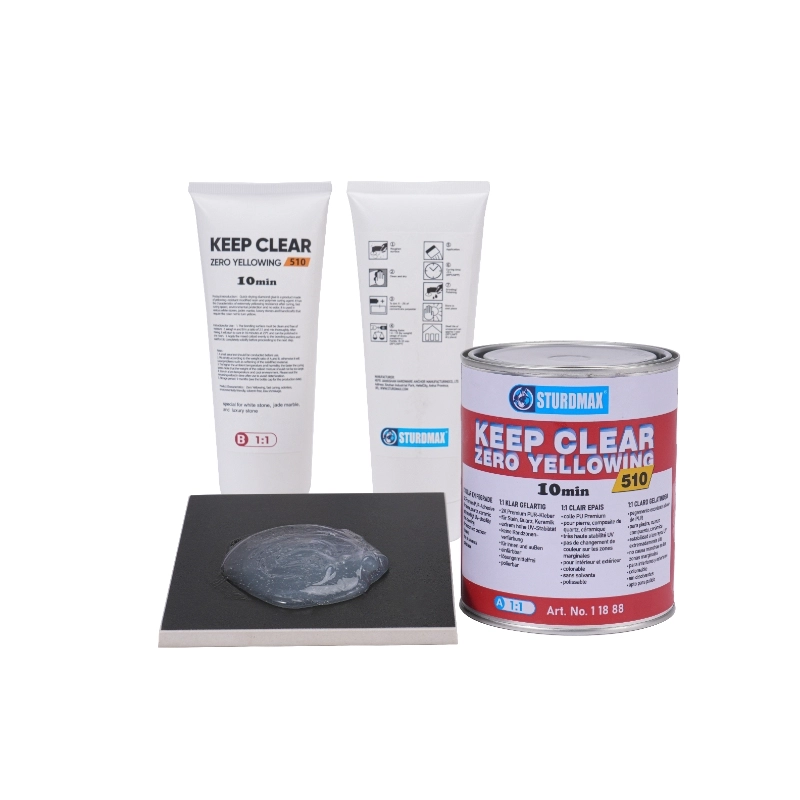
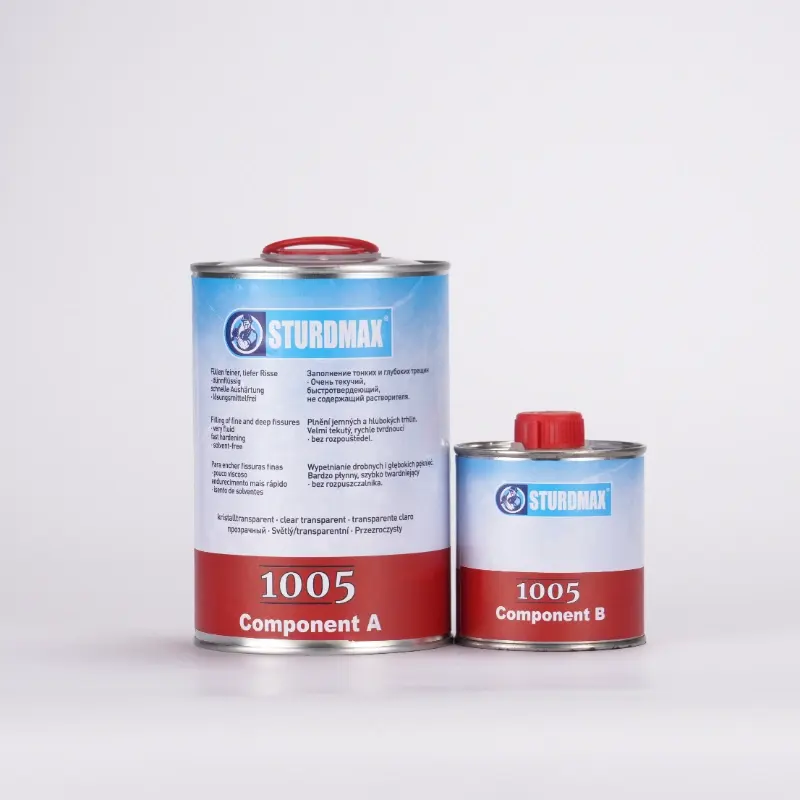
Adhesivo epoxídico is a bonding material commonly formulated from a resin and a hardener. When the two components are mixed in the specified ratio, a chemical reaction begins, gradually turning the mixture into a hardened bond. This two-component design allows manufacturers to develop products for different bonding requirements, including stone repair, edge bonding, and selected fabrication applications.
In stone processing, epoxy adhesives are used where the properties of the particular formulation match the material and working conditions. Depending on the product, they may offer good adhesion, dimensional stability, and resistance to moisture or certain chemicals after curing. However, these characteristics vary by formulation, so it is important to check the technical data sheet rather than assume every epoxy product performs the same way.
Epoxy adhesives are also available in different viscosities. A thicker formula may be suitable for certain vertical or gap-filling applications, while a lower-viscosity product may be designed for other bonding tasks. Choosing the right consistency, mixing ratio, and curing conditions helps achieve a more reliable result.
What Is Polyester Adhesive Used for in Stone Processing?
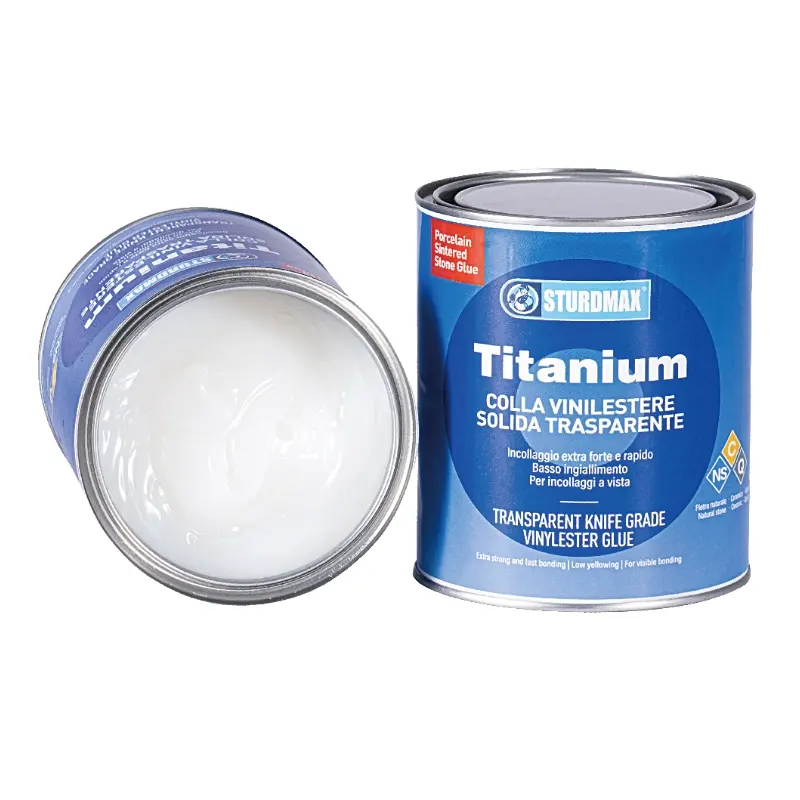
Polyester adhesive is widely used in stone fabrication, particularly for marble repair, filling small chips, and bonding selected stone components. Many polyester formulations are valued for their relatively fast curing, which can help fabricators move repaired pieces to the next stage of processing without long delays. This can be especially useful in workshops handling multiple stone slabs, countertop edges, and decorative components every day.
Another practical advantage is that polyester adhesives are available in different colors and consistencies. Fabricators can choose a formulation that better matches the stone’s appearance or suits the repair method. Some products are intended for filling surface imperfections, while others are designed for bonding specific stone components. The product label and technical documentation should always guide the selection.
Still, faster curing does not automatically make polyester adhesive the best choice for every job. Working time, bond performance, and suitability for the service environment depend on the formulation and application. Before choosing a polyester product, consider whether the finished stone will face moisture, temperature changes, mechanical stress, or other conditions that may affect long-term performance.
Epoxy Adhesive vs Polyester Adhesive: Key Differences
The two adhesive types serve many of the same industries, but their properties and ideal uses can differ. The following table provides a general comparison. Actual performance depends on the specific product formulation and the conditions of use.
| Comparison Factor | Adhesivo epoxídico | Polyester Adhesive |
| Typical stone applications | Selected stone bonding, repairs, and demanding bonding tasks | Marble repairs, chip filling, and routine stone fabrication |
| Curing behavior | Varies by formulation; some products provide a longer working time | Often selected for relatively fast curing |
| Horario laboral | Depends on resin system, hardener, and temperature | Depends on formulation and curing system |
| Bonding performance | Can provide strong, durable bonds when correctly selected and applied | Can perform well in applications suited to the product |
| Environmental resistance | Some formulations offer good moisture or chemical resistance | Resistance varies by product and intended application |
| Color and consistency | Available in different formulations and viscosities | Available in different colors and consistencies |
| Cost considerations | Evaluate material cost alongside performance and service requirements | May be economical for suitable routine processing tasks |
| Main selection priority | Match documented performance to the bonding requirements | Balance curing speed, repair needs, and application suitability |
Bonding Strength and Long-Term Durability
One of the main considerations when comparing epoxy and polyester adhesives is the performance required from the finished bond. Certain epoxy formulations are designed for demanding bonding applications and can provide strong, durable joints when correctly selected and applied. Polyester adhesives also perform well in many routine stone fabrication and repair tasks, especially when the product is specifically developed for the intended material.
However, it would be misleading to say that one adhesive type is always stronger than the other. Actual results depend on the product formulation, stone composition, surface preparation, joint design, mixing accuracy, and curing conditions. A poorly prepared surface can weaken a bond regardless of the adhesive selected.
For projects involving large stone components, visible joints, or parts that may experience repeated stress, review the manufacturer’s performance data and application recommendations. When necessary, conduct a small test on the actual stone before proceeding with full production. This helps confirm compatibility and reduces the risk of bonding problems after installation.
Curing Time and Working Efficiency
Curing time is another important consideration for stone workshops. Many polyester adhesives cure relatively quickly, making them convenient for repairs and production processes where fast turnaround matters. Shorter curing times can help reduce waiting between bonding, sanding, polishing, and other operations, provided the adhesive has reached the required level of cure.
Epoxy adhesives may offer a longer working window in some formulations, which can be useful when components need careful positioning or alignment. However, epoxy products vary considerably: some cure quickly, while others are designed for longer working times. Temperature, mixing ratio, and the amount of adhesive applied can also affect curing behavior.
When comparing products, look beyond the advertised curing time. Check the pot life, working time, time to handling strength, and time before further processing. These are different measurements, and confusing them can disrupt production schedules. The most suitable option is the one that provides enough working time for accurate placement while meeting the project’s required turnaround.
Water Resistance and Environmental Conditions
The environment in which a bonded stone component will be used should influence adhesive selection. Kitchen countertops, bathroom surfaces, decorative wall panels, and interior stone features may experience different levels of moisture, cleaning chemicals, temperature variation, and mechanical stress.
Some epoxy formulations offer good resistance to water and certain chemicals after full curing, which may make them suitable for applications with specific environmental requirements. Polyester products can also perform effectively in appropriate settings, but their resistance characteristics depend on the formulation. Neither category should be assumed suitable for every wet or demanding environment without checking product specifications.
Consider the full service conditions, including whether the bonded joint will be exposed to standing water, frequent cleaning, outdoor weather, or temperature changes. Confirm the manufacturer’s recommended applications and limitations before purchasing. For critical installations, testing the complete bonding system under representative conditions can provide additional confidence.
When Should You Choose Epoxy AB Glue?
Epoxy AB Glue refers to a two-component epoxy adhesive system in which the resin and hardener are mixed before application. It can be a practical choice for stone bonding when the selected formulation meets the project’s requirements for adhesion, durability, working time, and environmental resistance.
For example, a fabricator working on stone components that require careful alignment may prefer a product with sufficient working time to position the parts accurately. In other situations, the main priority may be the adhesive’s documented performance under moisture exposure or mechanical loading. The right choice depends on the product’s tested capabilities, not simply the fact that it is an epoxy adhesive.
Before using an epoxy AB product, confirm the correct mixing ratio and follow the manufacturer’s instructions for surface preparation, application thickness, temperature, and curing. Mixing the components incorrectly can compromise the final bond. It is also important to check whether the adhesive is suitable for the specific stone, finish, and joint configuration. These steps help the product perform as intended and reduce avoidable repair costs.
When Is Polyester Adhesive the Better Option?
Polyester adhesive may be a practical option when a stone workshop needs a product for routine marble repairs, small chips, surface filling, or other applications supported by the product’s specifications. Its relatively fast curing in many formulations can be helpful for production lines where pieces must move through several processing stages within a limited time.
It may also be suitable when the workshop needs a particular color or consistency for a cosmetic repair. Matching the adhesive to the stone can improve the appearance of the finished piece, although the final result also depends on the stone’s natural pattern, lighting, finishing method, and the skill of the person applying the product.
Before choosing polyester adhesive, consider the service conditions and the performance required from the joint. If the bonded part will face demanding loads or frequent moisture exposure, confirm that the specific product is rated for that use. A quick cure is useful only when the adhesive also meets the project’s bonding and durability requirements.
How to Choose the Right Epoxy Stone Glue
Selecting the right epoxy stone glue starts with identifying the actual task. Determine whether you need to bond two stone pieces, repair a chipped edge, fill a small defect, or secure a component in a particular position. Different applications can require different viscosities, working times, and performance characteristics, so the product intended for one task may not be suitable for another.
Next, identify the stone type and the conditions the finished component will encounter. Natural marble, granite, engineered stone, and sintered surfaces can differ in porosity, surface characteristics, and bonding requirements. Check that the adhesive is approved for the intended material and follow the recommended surface preparation procedure.
Finally, compare technical data rather than relying on broad product descriptions. Review the mixing ratio, pot life, curing schedule, temperature limits, and any documented resistance properties relevant to the project. For a commercial order, ask the supplier for technical documentation and recommendations for the intended application. A small compatibility test can be worthwhile before using a new product across a full production batch.
Preguntas frecuentes
What is the main difference between epoxy and polyester adhesive for stone?
The main differences relate to formulation, curing behavior, bonding performance, and suitability for specific applications. Polyester adhesive is often used for fast stone repairs and routine fabrication, while epoxy products may be chosen for applications requiring particular bonding or durability properties. The product specifications should guide the final decision.
Is epoxy adhesive stronger than polyester adhesive?
Not in every situation. Some epoxy formulations provide high bonding strength and durability, but actual results depend on the adhesive, stone type, surface preparation, joint design, and curing conditions. Compare technical data for the specific products rather than relying only on the adhesive category.
Is epoxy AB glue suitable for marble and granite?
Some epoxy AB products are designed for bonding or repairing marble and granite, but compatibility varies by formulation. Check the manufacturer’s application guidance and technical data sheet before use. For valuable or visible stone surfaces, test the adhesive on a small area first.