





Stone Adhesive vs Traditional Cement: Which One Is Better for Stone Installation?
Release time: 2026-09-25
Table of Contents
Stone installation requires more than simply fixing one material to another. The bonding material can affect installation accuracy, curing time, joint appearance, durability, and even the way the finished stone surface is processed. For many years, traditional cement-based materials have been widely used for stone installation. However, the increasing use of marble, granite, engineered stone, terrazzo, and other decorative materials has created a greater demand for more specialized bonding solutions.
This is where Stone Adhesive becomes an important option. Rather than viewing adhesive as a complete replacement for cement, it is more useful to understand where each material performs best and which one better matches the requirements of a particular project.
How Does Stone Adhesive Differ from Traditional Cement?
Traditional cement-based materials and stone adhesives are designed around different installation approaches. Cement is commonly used as part of conventional wet installation, where the material provides a relatively substantial bonding layer between the stone and substrate. Its widespread availability, familiar application method, and suitability for large-area installation make it practical for many construction projects.
Stone adhesive, on the other hand, is formulated specifically for bonding stone or stone-related materials. Depending on the formulation, it can provide strong adhesion between stone surfaces, stone and other substrates, or individual components during fabrication and repair. This makes adhesive particularly useful when the project requires greater control over the bonding area and finished appearance.
Curing behavior is another important difference. Cement requires hydration and continued strength development, while many specialized adhesives are designed to cure within a more controlled timeframe. For stone processing, repairs, fabrication, or projects where waiting time needs to be minimized, a suitable adhesive can make the workflow more efficient.
The bonding layer also matters. Precision stonework often requires controlled application rather than the thicker material layers associated with conventional installation. In these situations, a purpose-designed adhesive can offer greater flexibility.
When Is Stone Adhesive a Better Choice?
The right bonding material depends heavily on the type of stone and the nature of the installation.
Marble and Light-Colored Stone
Marble and other light-colored stones require particular attention to the appearance of the finished joint. A bonding material that changes color, yellows over time, or performs poorly during polishing can affect the overall appearance of an otherwise high-quality stone surface.
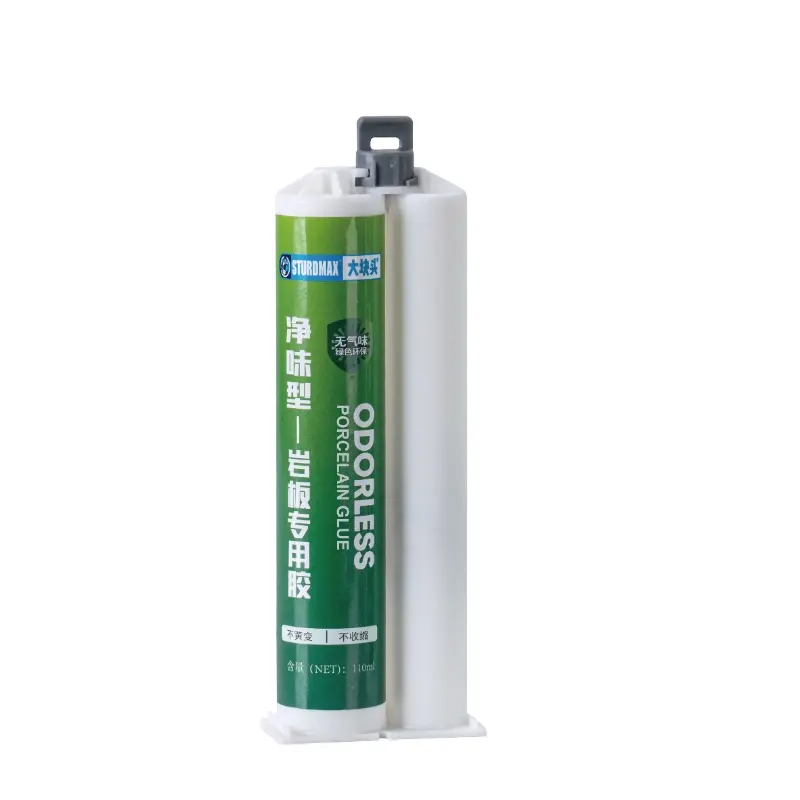
A suitable Marble Adhesive can therefore be more appropriate when both bonding performance and visual results matter. Certain adhesive formulations are designed with properties such as low shrinkage, polishing performance, transparency, or reduced yellowing tendency, making them suitable for decorative stone fabrication and installation.
Stone Fabrication, Repair, and Joining
Not every stone application involves installing large slabs across a floor or wall. Fabricators and contractors may need to repair chipped edges, join components, reinforce sections, or create precise connections between stone pieces.
These applications place different demands on the bonding material. Traditional cement is not necessarily designed for this type of precision work. A suitable Stone Bonding Glue can provide a more practical solution when the adhesive needs to hold two prepared surfaces together while maintaining an acceptable appearance after curing and finishing.
Vertical and Precision Applications
Vertical stone components and precision fabrication can also benefit from a specialized bonding solution. When installation requires accurate positioning, controlled adhesive thickness, and reliable bonding between prepared surfaces, a purpose-designed adhesive may provide advantages over conventional cement-based installation.
This does not mean that every vertical application automatically requires adhesive. The substrate, weight of the stone, project specifications, and installation method should always be considered before selecting a bonding material.
When Is Traditional Cement Still a Practical Choice?
Despite the development of specialized adhesives, traditional cement-based materials still have a place in stone construction.
For conventional large-area installations where stone is laid over an appropriate substrate and the project follows established wet installation practices, cement can remain a practical and economical choice. Contractors may also prefer it when the project does not require rapid curing, precision bonding, specialized finishing, or particularly tight control over joint appearance.
Cost, local construction practices, substrate conditions, and project specifications can all influence the final decision. In some cases, cement-based installation may be the most sensible option, while in others, adhesive provides a better fit.
The important point is that the choice should not be based simply on whether adhesive is newer than cement. It should be based on what the installation actually requires.
How to Choose the Right Stone Adhesive?
The first consideration is the stone itself. Marble, granite, engineered stone, terrazzo, techno ceramic, and artificial stone can have different surface characteristics and bonding requirements. An adhesive suitable for one material should not automatically be assumed to be suitable for another.
The installation environment is equally important. Indoor and outdoor applications may require different performance characteristics, while horizontal and vertical bonding can place different demands on the adhesive. Contractors should also consider whether they are bonding stone to stone, stone to a substrate, or individual fabricated components.
Appearance and post-installation processing should also be part of the decision. For decorative stone, factors such as transparency, color, yellowing resistance, shrinkage, and polishing performance can be just as important as bonding strength. If the adhesive will remain visible around a joint or be processed after curing, these characteristics deserve particular attention.
Curing speed should be considered as well. A fast-curing product may improve productivity, but the working time must still be sufficient for accurate positioning and application. The best adhesive is therefore not necessarily the fastest one; it is the one that provides the right balance between workability, curing, strength, and finished appearance.
How Can Sturdmax Stone Adhesives Support Different Applications?
Sturdmax offers a range of adhesive formulations designed for different stone bonding requirements rather than relying on one universal product.
For applications requiring a high-strength epoxy formulation, its Epoxy 2:1 5010 Crystal Marble Glue is designed for materials including marble, granite, engineered stone, terrazzo, and other stone-related surfaces. Its low shrinkage, high strength, polishing performance, and low yellowing tendency make this type of formulation suitable for applications where both bonding performance and appearance are important.
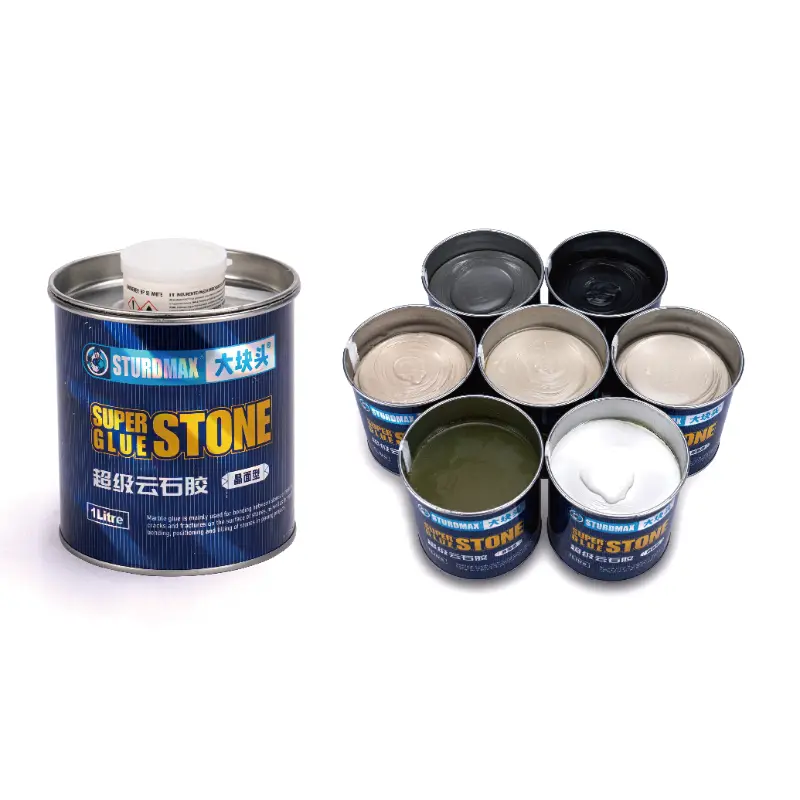
The Sturdmax range also includes crystal and marble glue products for stone processing, joining, and repair applications. These products give fabricators and contractors more flexibility when the project involves decorative stone or requires a controlled bonding result.
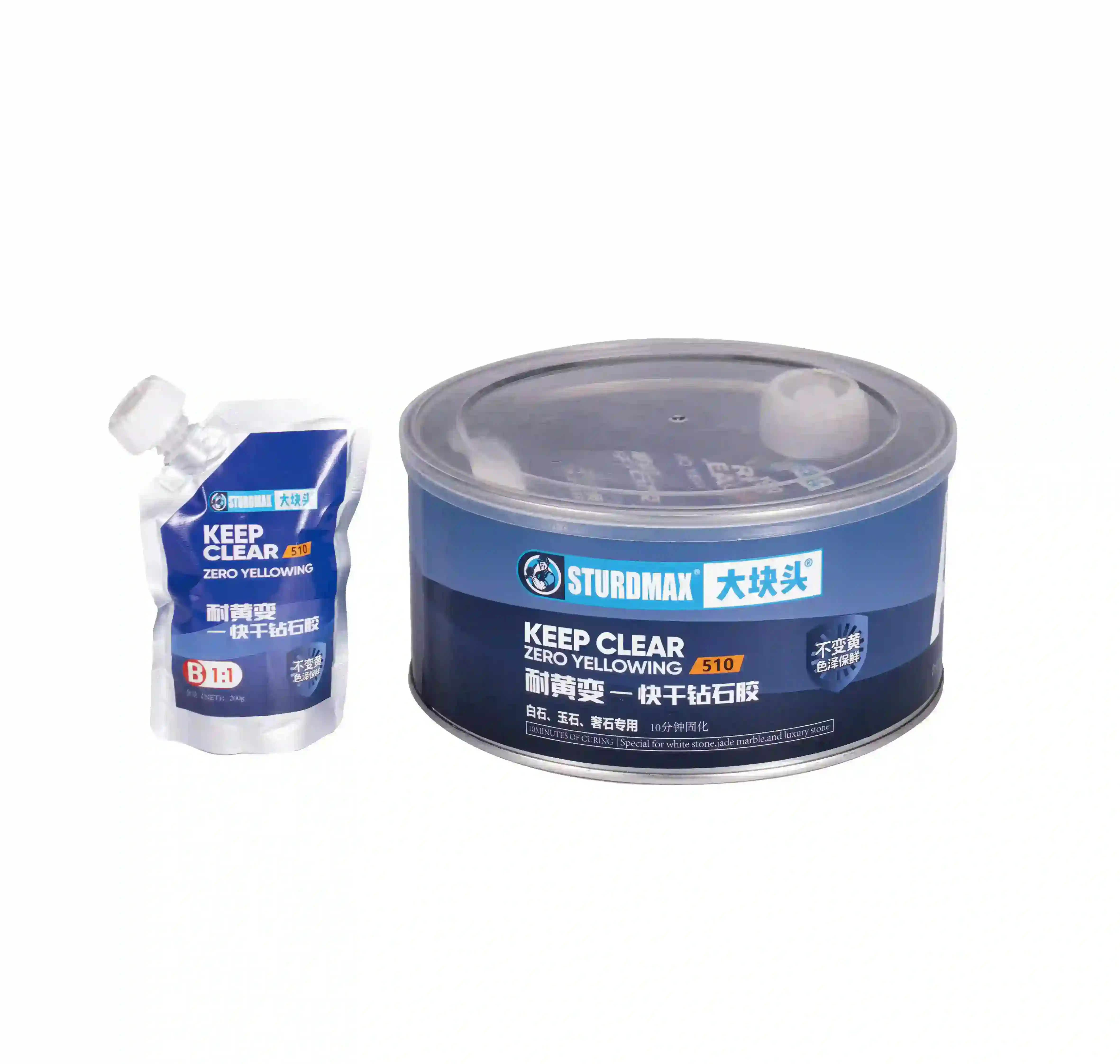
For applications where a different bonding technology is preferred, KeepClear 510 Polyurethane Adhesive provides another option. This highlights an important point in stone installation: there is no single adhesive chemistry that is ideal for every application. Epoxy, polyester, and polyurethane formulations can each serve different requirements depending on the material, environment, curing expectations, and desired finish.
Stone Adhesive vs Traditional Cement: Which Should You Choose?
There is no universal answer for every stone installation project. Traditional cement remains practical for many conventional, large-area applications where established wet installation methods are appropriate. Stone adhesive becomes more attractive when the project requires precision bonding, faster curing, controlled joints, stone repair, fabrication, or greater attention to the finished appearance.
For marble and light-colored stone, appearance-related properties may influence the choice as much as bonding strength. For fabrication and repair work, a specialized adhesive can offer flexibility that cement-based materials cannot provide. For conventional construction, however, cement may still be an economical and familiar solution.
The best approach is to evaluate the stone type, substrate, installation position, working environment, curing requirements, and final appearance before choosing the bonding material. With the right product matched to the right application, both traditional cement and modern stone adhesives can have a useful role in professional stone installation.
FAQ
Is Stone Adhesive stronger than traditional cement?
The answer depends on the specific products and application. A properly selected stone adhesive can provide high bonding strength for precision stone bonding, repair, and fabrication, while cement remains suitable for many conventional installation methods.
Can Stone Adhesive be used for marble?
Yes. Certain adhesive formulations are specifically designed for marble and other natural or engineered stones. When selecting an adhesive for marble, consider bonding strength, color, transparency, yellowing resistance, shrinkage, and polishing performance.
When should I choose epoxy stone adhesive?
Epoxy stone adhesive can be considered when the project requires strong bonding, low shrinkage, precision application, or good finishing performance. The exact product should be selected according to the stone, substrate, environment, and curing requirements.
Can Stone Adhesive completely replace cement for stone installation?
Not necessarily. Cement remains practical for many conventional large-area installations. Stone adhesive is better viewed as a specialized bonding solution for applications where precision, curing behavior, repair capability, or appearance requires different performance.