





Why Does White Marble Need a Special Marble Glue Solution?
Release time: 2026-10-02
Table of Contents
White marble is popular for countertops, bathroom vanities, wall panels, flooring, and decorative stonework. Its clean appearance works well in both modern and classic interiors, but it also makes bonding more demanding. Even a small amount of discoloration, an uneven joint, or visible adhesive residue can stand out against a white surface. Choosing the right glue is therefore about more than simply holding two pieces of stone together.
A suitable Marble Glue should match the stone’s color, porosity, application, and finishing requirements. The wrong product or an unsuitable application method may affect the final appearance, even when the bond initially seems strong. For stone fabricators, installers, and distributors, understanding these factors helps reduce rework and deliver a cleaner finish.
Why Is White Marble More Sensitive to Adhesive Discoloration?
White marble tends to reveal imperfections that darker stones can hide. A slightly yellow adhesive line, a cloudy area beneath the surface, or residue around a joint may become noticeable once the stone is installed under bright lighting. This is particularly important for white kitchen countertops, vanity tops, decorative panels, and mitered edges, where the finished surface is expected to look continuous.
Discoloration does not always come from the same source. Some adhesives may change color as they age or are exposed to environmental conditions. Other problems can result from contamination, unsuitable cleaning products, moisture, or an interaction between the adhesive and the stone. Identifying the actual cause is important before selecting a replacement product or changing the installation process.
A glue marketed for stone applications is not automatically suitable for every white marble project. Fabricators should check the manufacturer’s technical information, including color after curing, recommended applications, and any available data on color stability. Testing the adhesive on a sample of the actual stone is a practical way to identify potential appearance issues before full-scale production begins.
What Should You Look for in White Marble Glue?
When selecting White Marble Glue, start with the finished appearance you need to achieve. For visible seams, edge bonding, and decorative repairs, the cured adhesive color can be just as important as its bonding performance. A product that looks suitable in its container may appear different after mixing and curing, so a small test on the actual marble is more reliable than judging the product by its initial color alone.
Material compatibility is another important consideration. Different marble varieties can vary in mineral composition, surface condition, and porosity. The bonding requirements also change depending on whether the adhesive is being used for a countertop joint, an edge repair, a small chip, or a decorative component. A product designed for one application may not be the best choice for another.
Working time, mixing ratio, curing conditions, and finishing requirements should also influence the decision. In a busy fabrication workshop, the adhesive must fit the production schedule without forcing workers to rush mixing or handling. Always follow the product instructions and allow the recommended curing time before grinding, polishing, or putting the bonded stone into service.
Transparent Marble Glue vs. Crystal Glue: What Is the Difference?
Transparent Marble Glue is often considered when the adhesive line needs to blend into light-colored stone or remain as unobtrusive as possible. However, transparency alone does not guarantee that a joint will be invisible. The final result also depends on the marble’s natural pattern, the thickness of the adhesive layer, surface preparation, application technique, and the adhesive’s appearance after curing.
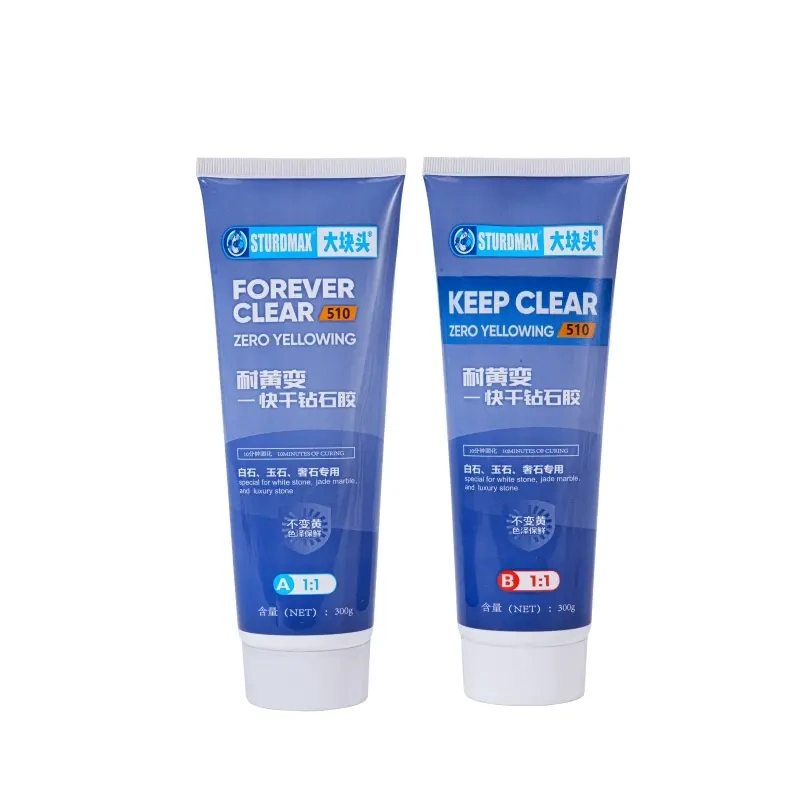
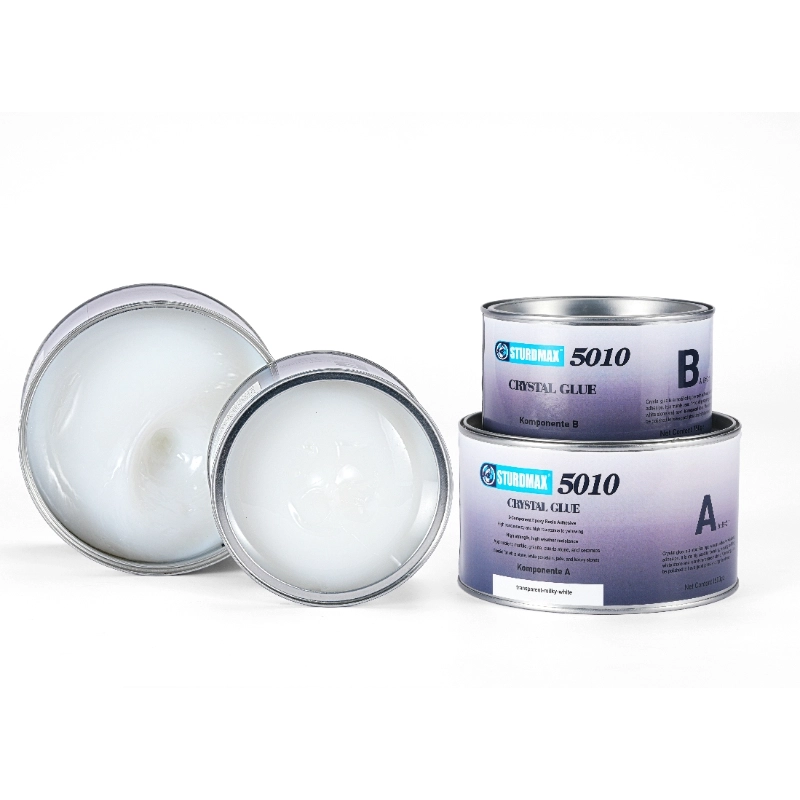
Crystal glue is another option worth evaluating for stone projects where a clear or visually refined finish is important. Depending on the formulation, it may be suitable for selected marble, decorative stone, or other compatible materials. The term “crystal glue,” however, is not a universal performance specification. Products sold under similar names can have different formulations, curing characteristics, and recommended uses.
Rather than choosing by product name alone, compare the manufacturer’s technical data and test the adhesive under realistic working conditions. Check the cured color, bond performance, ease of application, and compatibility with the intended stone. If the joint will be exposed to sunlight, heat, moisture, or cleaning chemicals, ask the supplier whether the specific product has been tested for those conditions.
How Can You Reduce Yellowing and Visible Glue Lines?
Good results begin before the adhesive is applied. Stone surfaces should be prepared according to the manufacturer’s instructions and kept free from dust, oil, polishing residue, and other contaminants that may interfere with bonding. If the stone has been treated with a sealer or another surface product, confirm that the adhesive is compatible with that treatment.
Mixing and application also matter. Two-component adhesives must be combined in the specified ratio and mixed thoroughly. Incorrect proportions or uneven mixing can affect curing and final performance. Apply only the amount required for the joint, and remove excess material using the method recommended for the product. Avoid introducing cleaning agents or solvents unless they are confirmed to be suitable for the stone and adhesive.
Environmental conditions should not be overlooked. Temperature can affect working time and curing behavior, while moisture and exposure conditions may influence certain adhesive systems. Do not assume that a faster-curing product is always better for a particular job. Instead, plan the work around the specified application and curing requirements. A sample test under realistic workshop conditions can reveal potential problems before valuable slabs are processed.
Choosing the Right Adhesive for Different Marble Applications
For white marble countertop joints, focus on cured color, bond strength, and the ability to produce a neat seam. For edge bonding and mitered profiles, consider the joint design, adhesive consistency, and whether the finished area will undergo additional grinding or polishing. Small chips and localized repairs may require a different approach from structural bonding or joining large stone components.
For decorative stone with translucent areas, appearance becomes especially important. An adhesive that works well on opaque white marble may not deliver the same visual result on a more translucent material. Testing should account for the stone’s thickness, background color, and lighting conditions whenever these factors affect the finished appearance.
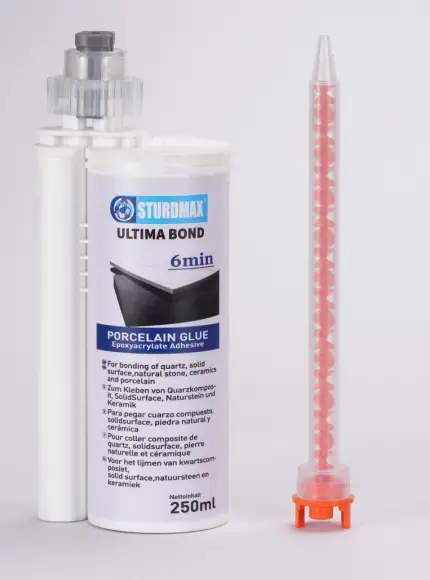
Production volume is another consideration for commercial fabricators. A suitable product should fit the workshop’s mixing process, working time, curing schedule, and quality-control procedures. Sturdmax’s marble glue and crystal glue product ranges can be evaluated according to these application requirements. Buyers should confirm the exact product specifications, supported materials, and technical recommendations with the supplier before placing a bulk order.
FAQ
Why does marble glue turn yellow on white marble?
Possible causes include adhesive aging, environmental exposure, contamination, or unsuitable application conditions. The actual cause depends on the product and the installation, so check the technical information and test the adhesive before use.
Is crystal glue suitable for white marble?
It may be suitable for certain applications, depending on the specific formulation and the marble being bonded. Confirm material compatibility, cured color, and bonding requirements before selecting a product.
How can I make marble glue joints less visible?
Choose an adhesive with a suitable cured appearance, prepare the stone correctly, control the amount applied, and follow the recommended mixing and curing procedures. Testing on a sample helps identify appearance issues in advance.
Does transparent marble glue prevent yellowing?
Not necessarily. Transparency describes how the adhesive looks, while resistance to discoloration is a separate property. Check the manufacturer’s available color-stability information rather than assuming a transparent product will remain unchanged.