



How Premium Epoxyacrylate Stone Glues Prevent Yellowing
Release time: 2026-05-15
In the competitive landscape of high-end stone fabrication, a flawless finish is the ultimate measure of quality. When dealing with luxury materials such as pure white marble, engineered quartz, or ultra-dense sintered stone slabs, the structural integrity of a bonded joint is only half the battle; long-term visual permanence matters just as much. There is nothing more damaging to a fabricator’s market reputation than a premium countertop installation that develops ugly, amber-colored seams just months after delivery.
For years, B2B buyers, international distributors, and large-scale stone processing centers accepted a certain degree of aesthetic degradation as an unavoidable operational risk. Traditional stone mastics provided the necessary curing speed but consistently sacrificed ultraviolet (UV) stability. Today, advanced chemical engineering has disrupted this compromise, delivering next-generation adhesive solutions engineered specifically to withstand the harsh realities of light exposure and thermal stress without losing optical clarity.
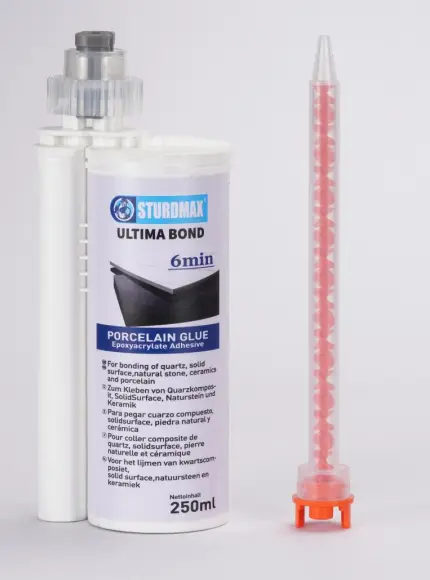
Understanding the Costly Nightmare of Joint Discoloration
Fabricators executing intricate interior designs face a relentless environmental enemy: ultraviolet radiation and indoor fluorescent lighting. The structural adhesive applied at a critical miter joint must endure more than just mechanical weight; it must maintain its color matrix under constant light exposure.
The Chemical Breakdown: Standard bonding agents rely on polymer formulations that break down when subjected to UV rays. This molecular degradation manifests as a distinct yellowing or browning effect directly along the visible seam line.
The Financial Fallout: For a commercial stone distributor or heavy-duty fabrication shop, a discolored joint translates directly into expensive warranty claims, rejected custom furniture pieces, and severely damaged client trust.
Material Sensitivity: Modern high-density surfaces like sintered slabs possess zero porosity and high reflectivity. This means any optical shifting or yellowing within the adhesive matrix becomes instantly glaring to the naked eye, ruining the illusion of a continuous stone block.
Epoxyacrylate vs. Traditional Mastics: The Molecular Difference
To understand how next-generation adhesives maintain absolute clarity, one must look closely at the underlying polymer chemistry. The shift from outdated polyester resins to specialized premium epoxyacrylate stone glues represents a massive technological leap forward for the stone processing industry.
Polyester mastics utilize unsaturated polymer chains that are highly vulnerable to UV-induced free radical oxidation. When sunlight hits these unstable chemical bonds, it breaks them apart, creating light-absorbing chromophores that tint the cured glue amber.
In contrast, an epoxyacrylate hybrid combines the extreme mechanical toughness of an epoxy backbone with the rapid curing speed and exceptional UV resistance of aliphatic acrylic monomers. This unique cross-linked molecular network forms a highly stable barrier that effectively repels UV radiation, completely preventing the formation of color centers.
The table below outlines how these two categories of industrial adhesives perform across critical commercial metrics:
| Performance Metric | Traditional Polyester Mastic | Non-yellowing stone adhesive (Epoxyacrylate) |
| UV Stability (Yellowing Resistance) | Poor (Turns amber/yellow within 3-6 months) | Exceptional (Remains water-clear under long-term exposure) |
| Bonding Strength (Tensile/Shear) | Moderate (Prone to brittle failure under stress) | High-Strength (Exceeds the cohesive strength of the stone) |
| Curing Profile (at 25°C) | 10-15 minutes, highly brittle finish | 3-5 mins open time; 15 mins set; 3 hours full cure |
| Miter Joint Performance | High shrinkage rate; creates visible joint lines | Zero-shrinkage; ideal for 45-degree seamless jointing |
| Chemical & Moisture Resistance | Low (Degrades when exposed to household cleaners) | Superior (Waterproof, oil-proof, acid and alkali resistant) |
Industrial Best Practices for Achieving Permanently Clear Seams
While advanced chemical composition provides the necessary baseline for UV resistance, executing a flawless, un-degradable joint requires a disciplined technical workflow on the production floor.
Rigorous Substrate Preparation: Before applying any adhesive, fabrication teams must ensure that the stone edges are mechanically square and completely free of residual moisture, cutting oils, or stone dust. Any contaminants trapped within the joint line can alter light refraction, mimicking the appearance of discoloration.
Precise Catalyst Ratios: Epoxyacrylate adhesives rely on a specific peroxide hardener paste to initiate cross-linking. Deviating from the manufacturer-recommended 1% to 3% mixing ratio can leave unreacted monomers or excess catalyst within the cured matrix. These leftover chemicals are highly unstable and will accelerate yellowing when exposed to environmental heat and light.
Color Matching Engineering: Utilizing high-purity liquid color pigments designed specifically for acrylic and epoxy resins allows fabricators to perfectly replicate the background tone of the slab. Because the base glue possesses an optically clear, water-like transparency, the mixed color remains perfectly stable without shifting or muddying over time.
Secure Your Fabrication Quality with Sturdmax
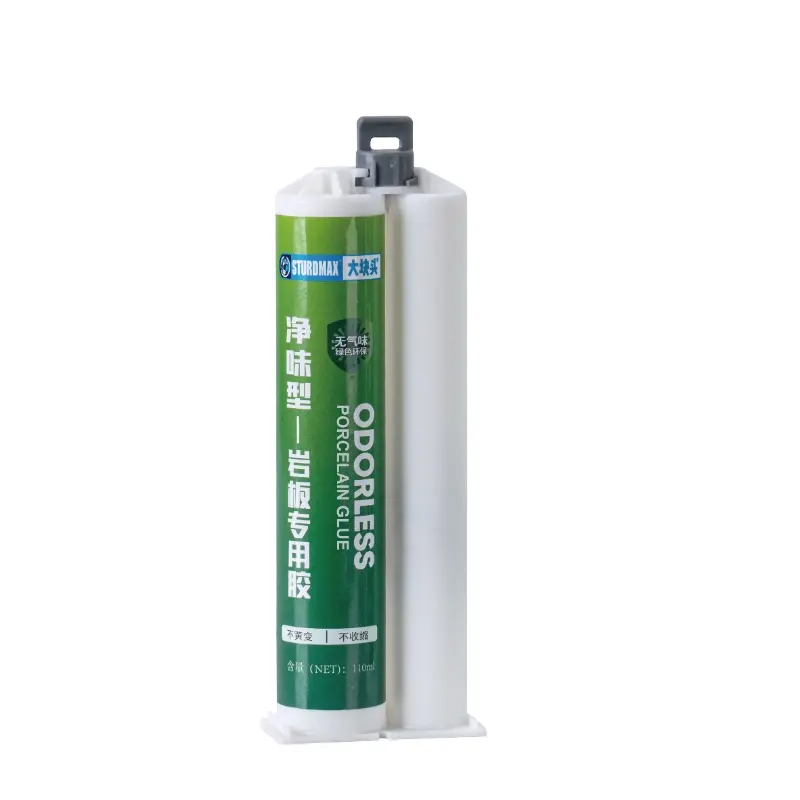
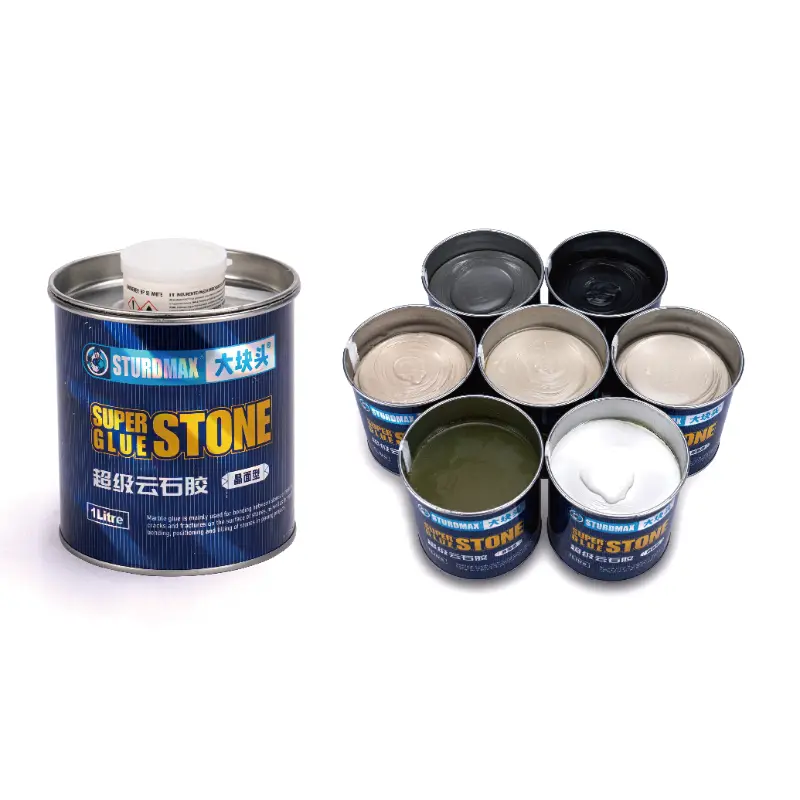
In the B2B stone supply chain, consistency and reliability are the ultimate currencies. Mitigating the risk of joint discoloration allows commercial processing plants and international distributors to command premium pricing, eliminate costly rework, and secure long-term commercial contracts. Sturdmax Platinum Epoxyacrylate Stone Adhesive is engineered specifically to eliminate the vulnerabilities of traditional bonding agents. With its water-clear transparency, rapid structural cure profile, and relentless resistance to UV-induced yellowing, it provides the peace of mind that modern heavy-duty fabricators demand.
Don’t let inferior adhesives compromise your high-end stone projects. Contact our technical sales team at alice@sturdmax.com or connect via WhatsApp today to request detailed Technical Data Sheets (TDS) and secure exclusive B2B wholesale pricing.
Frequently Asked Questions
Q: Can epoxyacrylate stone glue be used safely for outdoor facade installations?
Yes. Thanks to its advanced aliphatic acrylic modification, epoxyacrylate possesses far superior UV stability compared to standard polyester or indoor structural epoxies. However, for extreme, direct-sunlight structural exterior cladding exposed to severe weather cycles, always consult our technical datasheet regarding specific load-bearing UV limitations.
Q: What causes a stone glue to turn yellow even if it claims to be UV-stable?
Yellowing in high-quality adhesives is almost always caused by over-catalyzing (adding too much hardener paste) or using low-grade, non-UV-stable liquid color pigments that fade or shift under light. Adhering strictly to a 1-3% catalyst ratio and using resin-compatible tints completely prevents this issue.
Q: How does the cure time of epoxyacrylate compare to a standard structural epoxy?
Standard structural epoxies require anywhere from 8 to 24 hours to achieve full strength, which creates massive logistical bottlenecks in a high-volume fabrication shop. Epoxyacrylate delivers the exceptional structural strength of an epoxy but cures completely within 3 to 5 hours, allowing fabricated slabs to be polished, packed, and shipped on the same working day.