




What Makes Polyurethane Stone Adhesive Ideal for Vertical Bonding
Release time: 2026-06-24
Table of Contents
Bonding stone on a vertical surface is a different challenge than gluing a flat countertop seam. Gravity works against you the moment the adhesive goes on, and a glue that performs beautifully on a horizontal slab can sag, drip, or slowly slide out of position on a wall panel or vertical cladding joint. This is exactly the gap that polyurethane stone adhesive is engineered to fill.
For fabricators working on TV background walls, vertical stone cladding, or upright display panels, the choice of adhesive isn’t just about bond strength — it’s about whether the material stays exactly where it’s placed during the critical curing window.
Why Vertical Bonding Fails More Often Than Fabricators Expect
Most adhesive failures on vertical applications trace back to one of three issues:
- Low viscosity formulas slump under their own weight. Liquid-grade adhesives spread thin and flow downward before curing begins, leaving uneven joint thickness or visible drip marks.
- Fast-curing resins don’t allow repositioning. If a panel shifts slightly during installation, a glue that sets too quickly leaves no margin for correction.
- High-shrinkage adhesives create internal stress. As the resin cures and contracts, vertical joints — which already carry gravitational load — are more prone to micro-cracking over time.
This is where formula consistency matters as much as raw bonding strength.
The Gel Factor: Why Consistency Changes the Outcome
A polyurethane stone adhesive with a gel-like, non-sagging consistency behaves fundamentally differently from a free-flowing liquid resin once applied vertically:
- The gel structure holds its shape on contact, resisting gravity instead of fighting it.
- It allows thin bonding joints, which is critical for stone cladding where excess glue thickness would be visually obvious.
- It maintains workability for roughly 5–10 minutes at 20°C, giving installers enough time to align panels before initial set begins.
For thinner stone veneers or sintered panels mounted vertically, this stability during the open time is often the difference between a clean, flush installation and one that requires rework.
Polyurethane vs Liquid Epoxy for Vertical Stone Applications
| Property | Liquid Epoxy/Polyester | Gel-Type Polyurethane Adhesive |
| Behavior on vertical surfaces | Prone to sagging before cure | Stays in place due to gel consistency |
| Shrinkage during cure | Moderate to high | Very low, minimizing joint stress |
| Working time at 20°C | Often 2–5 minutes | Approx. 5–10 minutes |
| Yellowing outdoors | Varies by formula | Resistant even in outdoor exposure |
| Suitable substrates | Mainly stone-to-stone | Stone, Techno Ceramic, terrazzo, and more |
The takeaway for fabricators: vertical jobs reward adhesives that prioritize dimensional stability over raw speed.
Where This Matters Most in Real Installations
Beyond TV background walls, vertical bonding challenges show up across several common scenarios:
- Stone-clad columns and pillars in commercial lobbies, where joints are visible at eye level.
- Outdoor facade panels, where temperature swings and UV exposure test both yellowing resistance and bond durability simultaneously.
- Repair work on cracked vertical slabs, where the adhesive must fill voids without slumping out of the crack before curing.
In each case, a low-shrinkage, gel-consistency stone adhesive for vertical bonding reduces the risk of callbacks that liquid-only formulas can’t always prevent.
A Note on Choosing the Right Supplier
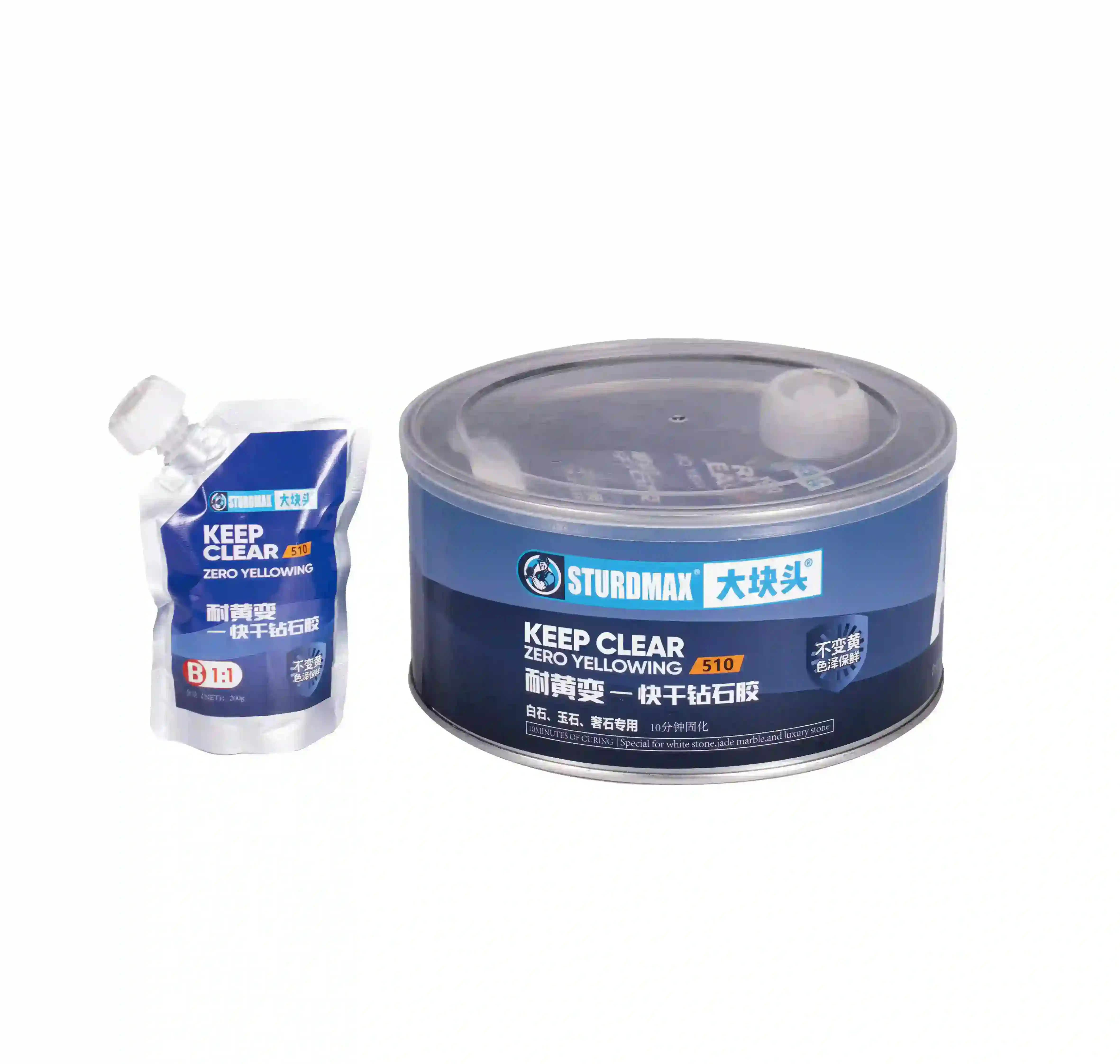
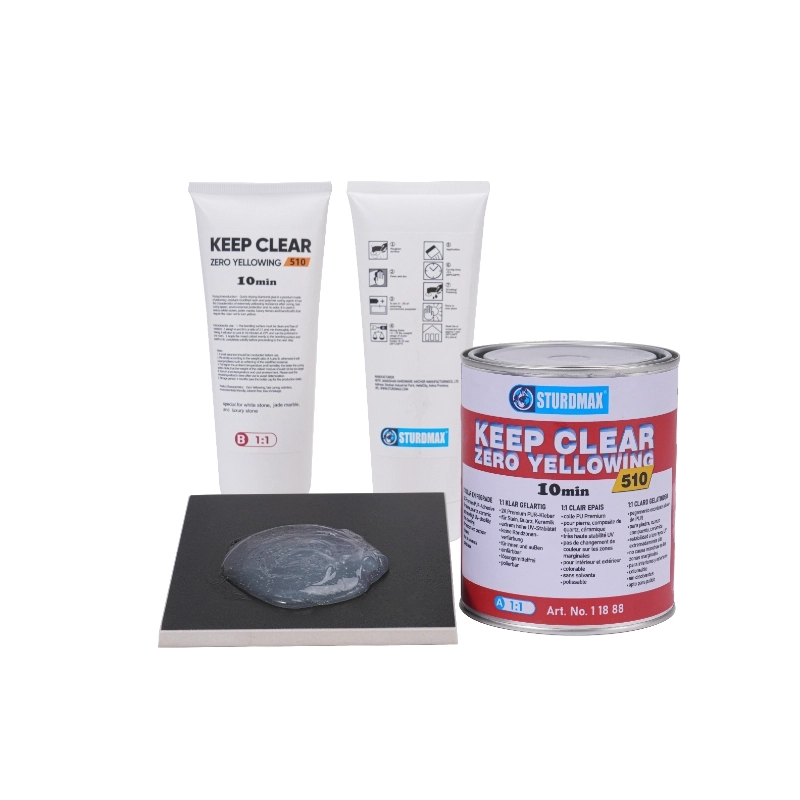
Vertical bonding failures rarely show up immediately — they surface months later as hairline cracks or slight panel shifts, often well after the project has been signed off. For fabricators and distributors, that delayed-failure risk is exactly why formula consistency, not just marketed bond strength, deserves real scrutiny before sourcing. Sturdmax has engineered its Keep Clear 510 polyurethane adhesive specifically around gel-stability, low shrinkage, and long-term non-yellowing performance, backed by documented technical data and export-ready packaging for global stone fabrication partners. If your next project involves vertical cladding, columns, or outdoor panels, it’s worth comparing technical data sheets before committing to a generic liquid adhesive.
FAQ
Why does regular stone glue sag on vertical surfaces?
Most liquid-grade adhesives have low viscosity and continue flowing under gravity until curing begins, which causes uneven joints, drips, or visible sagging on walls and panels.
Can this adhesive be used outdoors on stone facades?
Yes — it’s formulated to resist yellowing even under prolonged outdoor exposure, making it suitable for hard stone like granite and Techno Ceramic in both indoor and outdoor vertical installations.
How long does polyurethane stone adhesive stay workable before setting?
At 20°C, the mixture typically remains workable for approximately 5–10 minutes, giving installers enough time to align and adjust panels before initial curing begins.