



Polyurethane vs Epoxy: Which is Best for Stone Miter Joints?
Release time: 2026-05-26
When fabricating luxury stone surfaces, choosing the right structural bonding agent is just as critical as the cutting process itself. Large-scale stone processing centers and commercial project contractors frequently handle expensive materials like pure white marble, quartz, and heavy-duty sintered stone slabs. For these high-density surfaces, executing a flawless, un-degradable miter joint determines whether a project succeeds or faces costly warranty claims.
For decades, structural epoxies were considered the standard for heavy-duty bonding. However, as modern architectural trends shift toward massive seamless islands and integrated stone fixtures, the physical limitations of traditional epoxies have created a demand for more advanced material science. Fabricators now face a critical technical dilemma: stick with traditional epoxy solutions, or upgrade to next-generation polyurethane systems that balance structural flexibility with optical clarity.
The Technical Realities of Stone Miter Joint Failures
Executing a perfect 45-degree miter joint on modern premium slabs exposes the structural adhesive to intense physical and environmental stress. Understanding why joints fail on a molecular level is essential for any commercial stone distributor or commercial fabrication shop looking to protect their bottom line.
The Problem of Rigid Stress Profiles: Structural epoxies cure into an incredibly hard, brittle matrix. While this provides excellent tensile strength, it creates a massive issue when bonding materials like sintered stone, which expand and contract with temperature fluctuations. Because the epoxy cannot flex, thermal expansion forces all the stress onto the stone edges, leading to micro-cracking and bond failure along the seam.
The Environmental Discoloration Risk: Standard epoxies contain aromatic chemical structures that naturally degrade when exposed to ultraviolet radiation and ambient indoor lighting. Over time, this chemical breakdown manifests as a noticeable yellowing effect, ruining the seamless look of light-colored marble or white quartz surfaces.
Moisture-Induced Delamination: In high-humidity environments like luxury kitchens and commercial bathrooms, consistent exposure to water and alkaline cleaning chemicals can weaken standard bonding structures, eventually causing the mitered edges to separate.
Deep Chemical Analysis: Epoxy Backbones vs. Polyurethane Systems
To eliminate joint failure completely, fabricators must understand the difference in polymer chemistry between traditional epoxies and advanced two-component polyurethane stone glues. This technological shift represents a major upgrade in how high-end fabrication shops handle structural assembly.
Traditional epoxies rely on a rigid cross-linked polymer network. This creates a high-strength but unforgiving bond that possesses virtually zero elasticity. When a heavy slab experiences vibration during transport or thermal shock from kitchen appliances, a rigid epoxy joint cannot absorb the kinetic energy, transferring the stress directly to the mitered edge.
In contrast, an advanced aliphatic polyurethane system utilizes a tailored hybrid structure that combines high structural load-bearing capacity with elastomeric flexibility. This molecular flexibility allows the cured adhesive matrix to act as a shock absorber between the bonded stone pieces. Additionally, the aliphatic chemical structure contains no UV-degradable components, meaning it remains perfectly clear without yellowing, making it a highly reliable seamless adhesive for white marble and engineered slabs.
The comparative data below demonstrates how these two categories of industrial adhesives perform under intense commercial use:
| Critical Performance Metric | Traditional Structural Epoxy | Ultra-clear sintered stone adhesive (Keep Clear 510) |
| Polymer Chemistry Base | Aromatic Epoxy / Amine Network | Advanced Aliphatic Polyurethane System |
| Elasticity & Impact Resistance | Very Low (Brittle; prone to stress cracking) | High Elastomeric Flexibility (Absorbs thermal shock) |
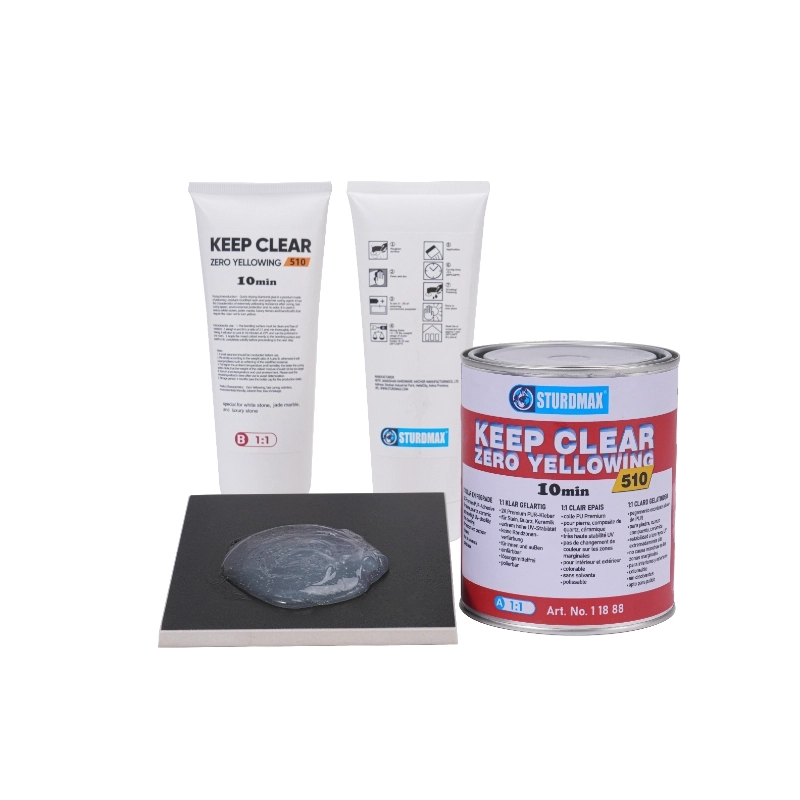
| UV Stability (Long-Term) | Poor (Turns amber/yellow under light exposure) | Exceptional (Keep Clear technology; zero yellowing) |
| Shrinkage Rate During Cure | Moderate (Can create micro-gaps in joints) | Virtual Zero-Shrinkage (Ensures flush miter lines) |
| Water & Chemical Resistance | Moderate (Can degrade under constant moisture) | Superior (Waterproof, oil-proof, acid/alkali resistant) |
| Packaging & Mixing System | Bulk cans (Requires tedious manual weighing) | 600g+600g Industrial Cartridge (Precision extrusion) |
Why Elastomeric Flexibility and Optical Clarity Matter Most
For high-volume stone fabrication factories and architectural designers, upgrading to a polyurethane-based system solves the two biggest headaches in modern slab installation: stress-cracking and unsightly joint discoloration.
First, preventing thermal shock and stress-cracking. Modern large-format sintered slabs are completely non-porous and manufactured under extreme pressure, making them highly sensitive to internal stress. When used as kitchen countertops surrounding hot stovetops or cold sinks, the stone expands and contracts constantly. A polyurethane adhesive flexes naturally with these movements, neutralizing the internal shear stress and permanently preventing the mitered edges from chipping or popping apart.
Second, maintaining permanent optical transparency. Pure white stone variants leave no room for error. If an adhesive yellows even slightly, it creates an ugly dark line that ruins the entire installation. Advanced polyurethane systems ensure the joint line remains completely invisible over decades of light exposure, maintaining a flawless look that clients expect from premium stone work.
Optimize Your Structural Assembly with Sturdmax
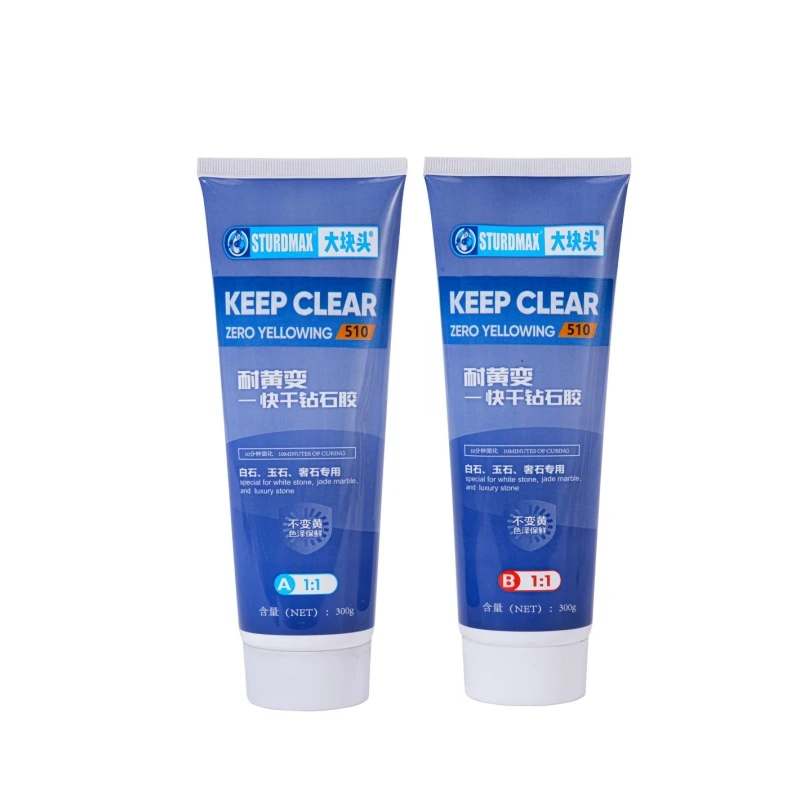
In the B2B stone supply chain, product reliability and operational efficiency are what set leading fabricators apart from the competition. Using outdated, brittle bonding agents on expensive modern slabs is a major operational risk that can lead to expensive product rejections. Keep Clear 510 Polyurethane Adhesive by Sturdmax is specifically engineered to solve these exact industrial pain points. Featuring an advanced dual-component cartridge system, a 1:1 mixing ratio, exceptional shock-absorbing flexibility, and permanent UV resistance, it provides the structural peace of mind that heavy-duty commercial projects demand.
Protect your premium stone installations and eliminate joint failures for good. Contact our technical sales team at alice@sturdmax.com or connect via WhatsApp today to request detailed Technical Data Sheets (TDS) and secure exclusive B2B wholesale pricing.
Frequently Asked Questions
Q: Why is a cartridge-based polyurethane system preferred over manual mixing in large factories?
Manual mixing in open cups introduces human error, leading to improper mixing ratios that cause weak spots or uncured adhesive. The Keep Clear 510 cartridge system uses a calibrated dual-dispensing gun with a static mixing nozzle, ensuring a perfect 1:1 ratio every single time, accelerating assembly lines and eliminating material waste.
Q: Can this polyurethane adhesive handle heavy outdoor quartz cladding installations?
Yes. Because it uses an aliphatic polyurethane formula, Keep Clear 510 possesses exceptional weather resistance and UV stability, meaning it will not degrade or yellow in outdoor applications. Its natural flexibility also allows it to easily handle the intense thermal expansion and contraction cycles common in exterior facades.
Q: How long does it take for a polyurethane stone glue to cure compared to epoxy?
Traditional structural epoxies often require 12 to 24 hours to cure completely, creating major bottlenecks in the shop. Keep Clear 510 provides a manageable working window for precise stone alignment, yet cures fast enough to allow fabricators to safely move, polish, and prepare the slab for shipping on the same day.